
Long looked down upon, the video game industry is now widely recognized as a major cultural sector, generating record revenues year after year. But not everything is rosy, especially when it comes to the workplace environment. Many major studios have experienced waves of mass layoffs in recent years, and employees are making efforts—with varying degrees of success—to unionize in order to protect themselves from overbearing management. But this particular climate extends beyond the studios to the trade press and the journalists who cover the industry’s news. Traditional media outlets, also seeking to cut costs, are implementing strategies that often result in layoffs or a reduction in the space devoted to journalism in their pages.
A major upheaval, the ripple effects of which have given rise to a multitude of new independent media outlets with innovative business models that are taking the reins: Aftermath, Rascal, Origami*, Rogue… While these outlets are united by their chosen subject matter, one characteristic of their business models also sets them apart: they have all chosen to pursue the vision of a “journalist-owned” newsroom, making it a hallmark of their offerings. While this movement is far from unique to the video game industry, the trend observed in this sector reflects a particular sense of frustration, coupled with a demand for quality journalism—and the root cause is always the same: business and wealthy executives who are undermining editorial work in the public interest—work over which we must regain control.
A knee-jerk reaction
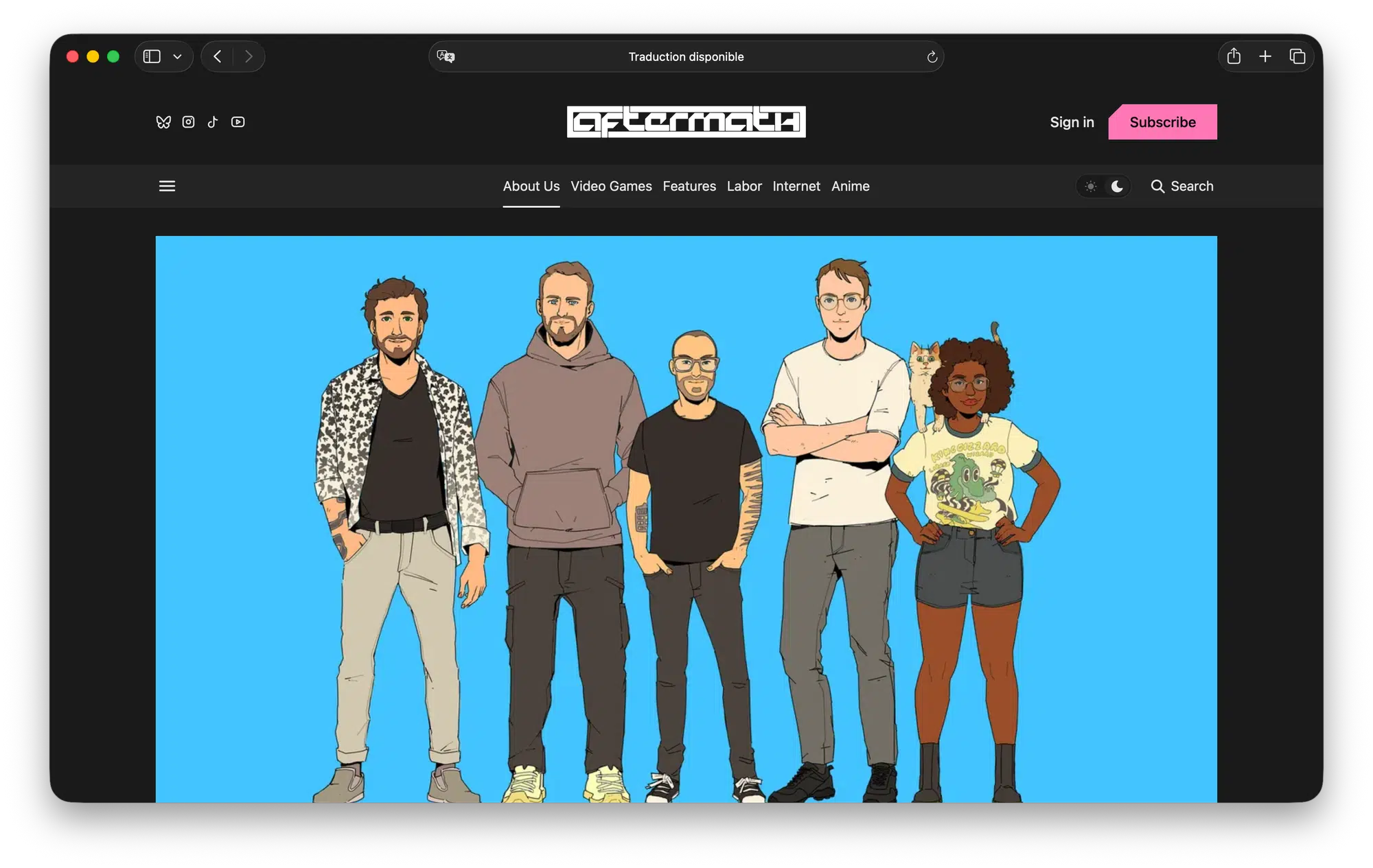
The post-COVID years have been tough for the video game industry, and specialized media outlets have not been spared—particularly in 2023, a year that marks a turning point for industry professionals. The year got off to a rocky start with the closure of Launcher, The Washington Post’s video game section, quickly followed by the same fate for Waypoint, the video game section of the now-defunct Vice. Other media outlets are undergoing major strategic realignments, aimed primarily at cutting costs—which often means layoffs. This was the case for Kotaku, owned by the G/O Media group, where Luke Plunkett had spent seventeen years writing before jumping ship in July 2023: “I felt that the budget cuts were becoming too severe. Some editorial directives went too far in terms of what I wanted to write and what I thought our readers appreciated about us.” Two days later, the newly independent journalist opened Discord and messaged his colleague Nathan Grayson to share an idea that had been on his mind for a long time: launching a media outlet. “I’d been talking about it privately with a few people for a while, sort of as a joke,” he recalls. The joke quickly turned into a serious project, inspired by similar, widely successful initiatives, such as Defector, a cooperative media outlet launched by former Gawker journalists, which helped convince the founding team—joined by three other journalists—that the project was not only desirable but also possible.
Across the Atlantic, just a few months apart, a similar trajectory is taking shape for the French outlet Origami. Also launched in 2023, the publication brings together several journalists who have worked at various news organizations, and whose negative experiences now define the publication’s founding values. The real catalyst came in late 2022, with the acquisition of the long-standing publication Gamekult by Reworld Media, which led to the departure of nearly the entire editorial staff. Among them was Florian Velter, then deputy editor-in-chief of Gamekult and now co-manager of Origami, which he launched alongside four colleagues, including journalist Héloïse Linossier. According to her, her fellow founders shared the same observation at the time: the video game press is a victim of consolidation that ultimately undermines journalism itself. “There are more and more large conglomerates gaining control over these media outlets and demanding content designed to drive clicks—with extremely long headlines optimized for search engine rankings,” she confirms. It’s the same story at the American outlet Rogue, founded in 2025 in the wake of the sale of Polygon and the layoff of a large portion of its editorial staff. On its website, the team at this independent media outlet also cites a harmful race for clicks, from which it seeks to break free: “We’ve all worked for companies that demand massive traffic numbers to line the pockets of those at the very top. This often pushes writers to prioritize Google above all else. That’s why AI has started to infiltrate your favorite websites, and why headlines are starting to look more and more like clickbait.”
New Opportunities and Responsibilities
The solution these newsrooms found: to take back control of the media’s strategy—from the business model to the editorial line, including marketing and customer service. At Aftermath, this refusal to depend on anyone was a given from the very beginning: “We never even considered the option of seeking an investor or belonging to someone else. From the very beginning, it was clear: we had to own our own website, because the history of video game journalism—and of most media outlets today—is a story of corporate takeovers and poor shareholder management,” summarizes Luke Plunkett.
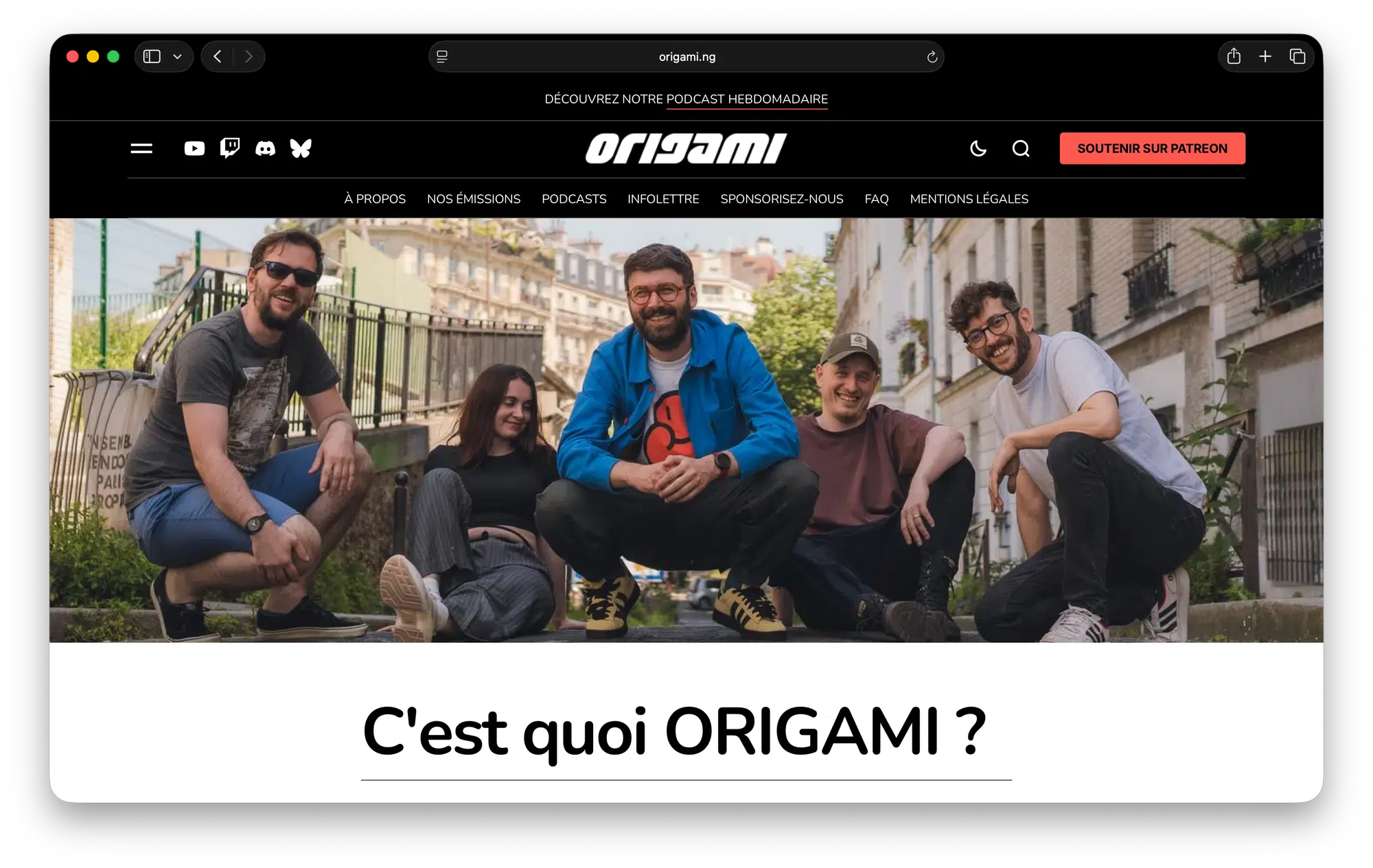
These journalists want to be their own bosses, but as a group, opting for a newsroom environment rather than working as freelancers. Within these media outlets, teams therefore share responsibilities, with organizational methods that are more or less defined. While tasks are divided based on each person’s interests, the model naturally requires a certain degree of versatility, acknowledges Héloïse Linossier, who, in addition to new editorial taskseditorial duties, now takes on responsibilities related to branding and representation that she hadn’t anticipated—having instead imagined herself as a “magazine journalist” fresh out of school, “writing in [her] own little corner”: “There are those mornings when you wake up, your hair’s a mess, and there are only two of us who can take photos to sell our merch,” she says. “And that’s OK—it’s part of the job.”
But for these journalists—who are co-owners of their media outlets and therefore responsible for their financial health—can the need for profitability take precedence to the point of affecting editorial decisions? “I always start with what I want to write about, and I present it in a way that, I hope, will make someone want to subscribe. That never pushes me to write something just to attract an audience,” says Luke Plunkett, for whom these new, ongoing responsibilities don’t feel like an editorial constraint—quite the opposite: “I can spend days on a story that will be read by 900 people, and I don’t feel bad about it at all, because it’s my company and I can do whatever I want.”
A compelling argument
For independent video game media outlets that adopt this model, the concept of being “worker-owned” is not merely an administrative or internal organizational issue: it is clearly emphasized and serves as a key selling point to convince their readers to support them. On its website, Rascal—a publication dedicated to board and tabletop games, whose founders have also written for established video game outlets like Polygon—displays its unequivocal slogan in large letters on its “About” page: “Write freely or die.” At Aftermath, it’s the first adjective used in its description, even before specifying that it’s a video game outlet. This is a deliberate choice that’s anything but coincidental, according to Luke Plunkett, who describes the impact of this label in attracting new subscribers as “massive”: “By highlighting that we’re worker-owned, we’re immediately saying: you don’t have to worry about that with us. We’re not going to publish ‘The 10 Best Spider-Man Movies.’ We’ll only write what we think you want to read. That’s why we emphasize ‘worker-owned’: it determines everything else.” For Héloïse Linossier, the value placed on independence in video game culture has greatly benefited the outlet: “In video games—and in many closely related cultural areas like comics, board games, and so on—there’s this very strong culture of funding by readers and players.”
 Marine Slavitch
Beyond the strategic and financial aspects, the takeover of newsrooms is also part of a deeply political initiative—one to which readers are not indifferent. The creation of journalist cooperatives directly echoes the social struggles currently shaking the video game industry itself, which is experiencing unprecedented unionization efforts, whether within studios or major media outlets. This political stance is also embodied by the recent launch of Mothership, which describes itself as a worker-owned newsroom. On their website, deputy editor Zoë Hannah and editor-in-chief Maddy Myers describe having seen “the industry’s most powerful executives raking in colossal salaries” while women journalists, people of color, and/or queer individuals “systematically bearing the brunt of the consequences” in an environment that is often hostile toward minorities. This is a particularly sensitive issue for the video game press, which has not forgotten the repercussions of Gamergate—a virulent campaign that presented itself in 2014 as a critique of the industry’s ethical standards but which actually served as a pretext for carrying out particularly violent anti-feminist cyberbullying.
Journalism vs. Business
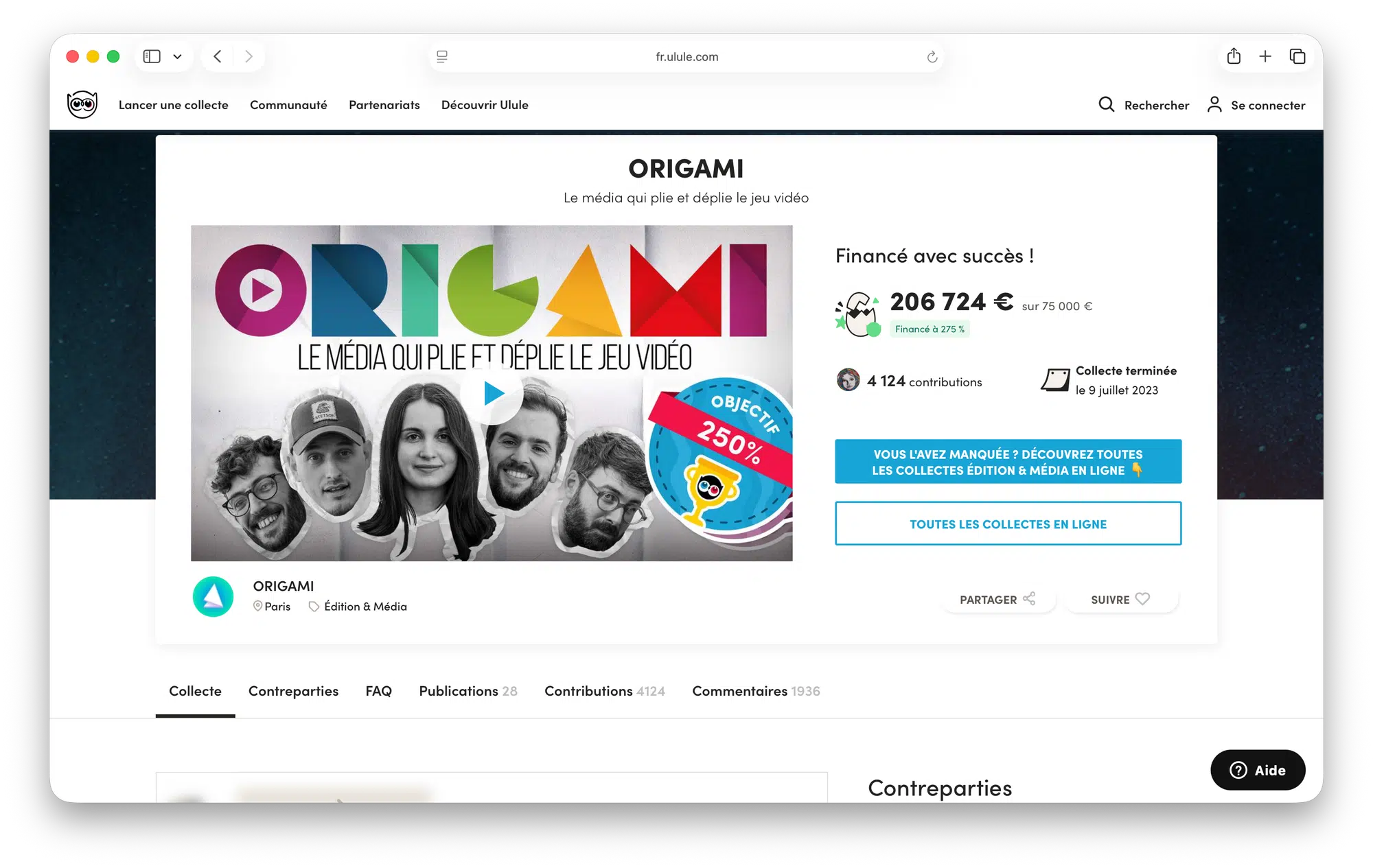
While these media outlets can boast that they reinvest all of their funds into editorial management and content production, they still need to have funds to begin with. For Origami, the cooperative (SCOP) was registered with a symbolic capital of €80, followed by a crowdfunding campaign on Ulule to get the project off the ground. The result: €206,724 raised. As for Aftermath, the editorial team took a leap of faith: they began publishing having invested only enough to launch a website, hoping to quickly gain subscribers thanks to their pre-existing content. Three years later, that gamble paid off, with 5,700 subscribers paying $7 or $10 per month, thanks to whom the publication is now profitable. “We reinvest that money back into the site, which helps it grow, which in turn increases the number of subscribers. That’s our plan—we’re hoping it keeps working for the next ten years,” says Luke Plunkett, before adding: “And, hopefully, with one or two pay raises for us thrown in somewhere along the way.” His current salary is 60% of what he used to earn at Kotaku.
As for Origami, the funds raised on Ulule when the project launched helped build a “safety net,” which the team is now trying to avoid using by working to diversify its revenue streams—in addition to the subscriptions offered through the Patreon platform—in order to break even. In particular, the media outlet secured a public grant from the Hauts-de-France region to produce the portrait series *Headshot*. At this point, the team is at least assured of being able to fund the next season, which will last one year, and the depletion of its reserves is “much slower than it was last year,” confirms Héloïse Linossier.
But the spirit of cooperation doesn’t stop at the doors of a single newsroom. For these organizations without shareholders or investors, mutual support becomes a prerequisite for survival on a larger scale. According to Luke Plunkett, teams from other cooperative media outlets, such as 404 Media, regularly communicate on Discord servers to support one another on technical, logistical, or financial issues. The journalist would like to see this solidarity become more structured, particularly to pool—and thus reduce—expenses that are currently unnecessarily duplicated by each small organization: lawyers, accountants, web hosting… but to achieve this, patience will be required: “Most sites in this sector have only been around for three or four years, and we’re still trying to find our footing. I think that once more sites have found theirs, we might have the leeway to explore ways to bundle subscriptions and share resources.”