Do you want to promote your media outlet’s brand beyond its usual platform, but aren’t sure where to start or whether it’s a practical idea? You’ve come to the right place—this practical guide will walk you through the process, from choosing the item to producing it.
🔎 Steps, resources, tips… This practical guide was created by the Médianes studio, which has been helping media founders define their marketing strategy and business model since 2020. Want to take it further or need some guidance? Discover our areas of expertise or contact us using this form.
1. Merchandising: What Is It?
Merchandising, or the sale of merchandise, is a business practice that falls under the umbrella of marketing. In the context of your media outlet, this approach will help you build loyalty among your community and raise your profile—for example, by featuring your logo or conveying a message. Whether it involves personalized products given to your team, your partners, or your audience, or products you sell, merchandising allows you to strategically promote your organization.
To optimize the creation of your merchandise, you should first consider the needs, uses, and sensitivities of your audience. The ideal is to offer a useful item that also aligns with the values of the people you're targeting. Also consider Kepner's 5Bs: the right product, in the right place, at the right time, at the right price, and in the right quantity.
Spotlight on Gaze
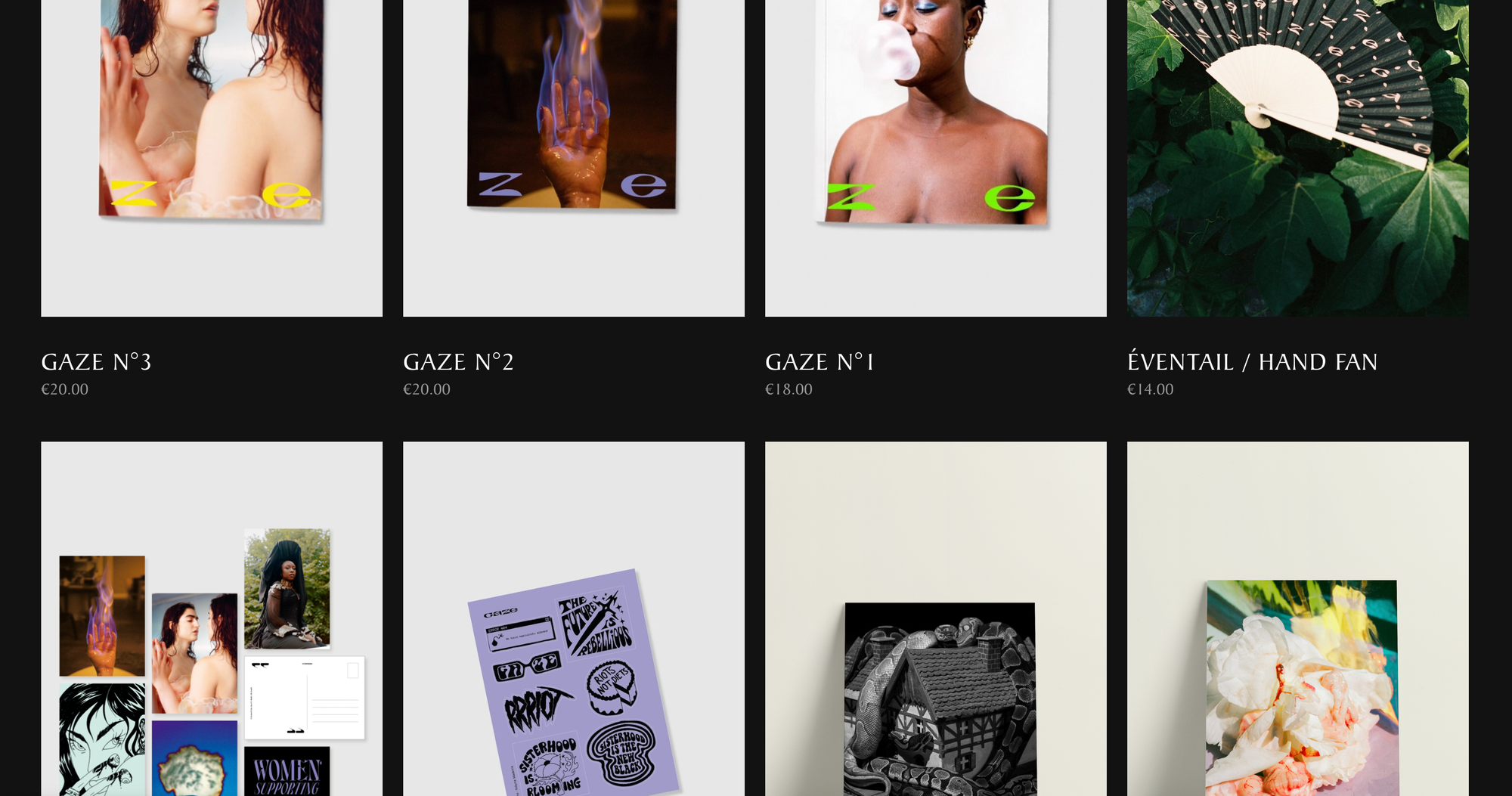
This feminist magazine, which highlights women's perspectives and the struggles of minorities, has chosen to offer merchandise that reflects its identity and aligns with its editorial mission, with options tailored to different budgets.
Gaze offers everything from T-shirts featuring iconic feminist quotes to sticker sheets, postcards, posters, and reproductions of works by artists with whom the publication collaborates. All of this is offered alongside subscriptions, making these merchandise items part of a comprehensive strategy.
Focus on Landforms
Launched in 2015, the journal Reliefs explores the worlds of yesterday and tomorrow through the eyes of researchers, artists, and geographers.
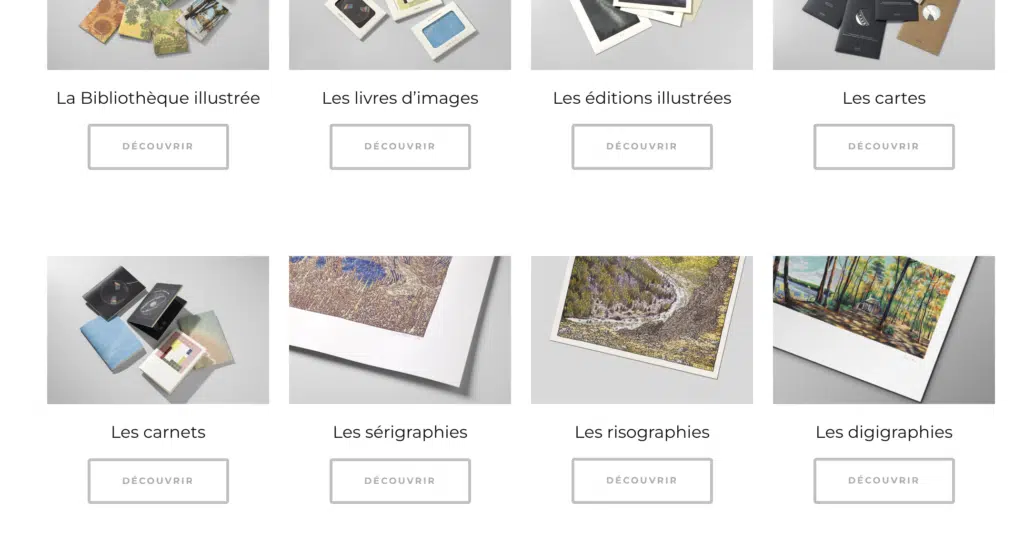
Dedicated to nature, adventure, and exploration, the Reliefs universe also extends to its merchandise: notebooks, planners, serigraphs, risographs, digigraphs, puzzles, coloring books, and even reprinted vintage maps. On the front? A map to hang up. On the back? Its story told.
Spotlight on Climax
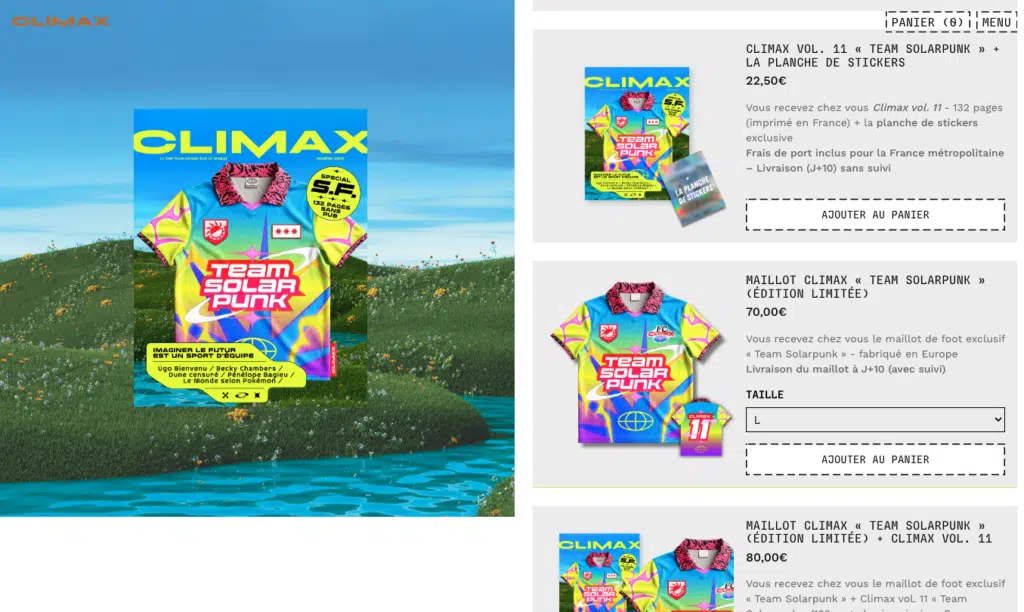
In contrast to alarmist rhetoric, Climax uses a colorful and activist fanzine to cover the climate crisis in a decidedly sarcastic and optimistic tone. The team regularly releases merchandise to coincide with the launch of a new issue. For the “Team Solarpunk” issue, dedicated to the World Cup, the publication produced a limited-edition soccer jersey, sold either separately or as part of a bundle with the magazine. The publication also offers sticker sheets, a “fascistometer” bookmark, and posters.
Spotlight on "Première Pluie"
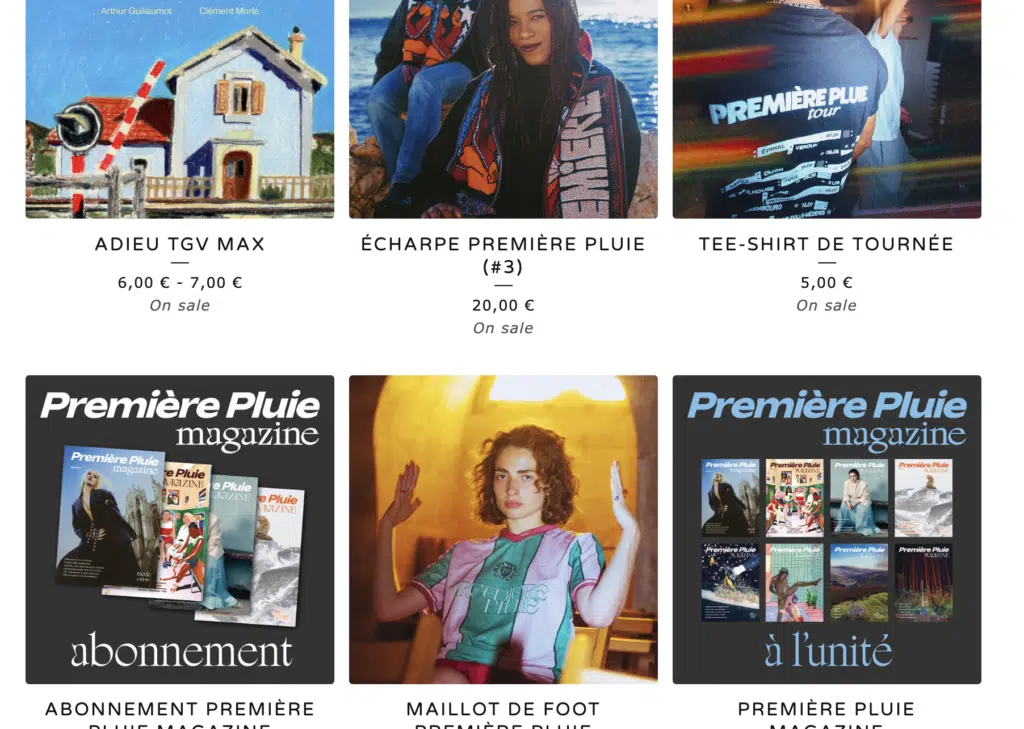
Through its website, social media channels, and free print magazine, Première Pluie features interviews with emerging artists, weekly playlists, and articles on international current events. In addition, the publication operates an online store featuring apparel (scarves, T-shirts).
Spotlight on The European Correspondent
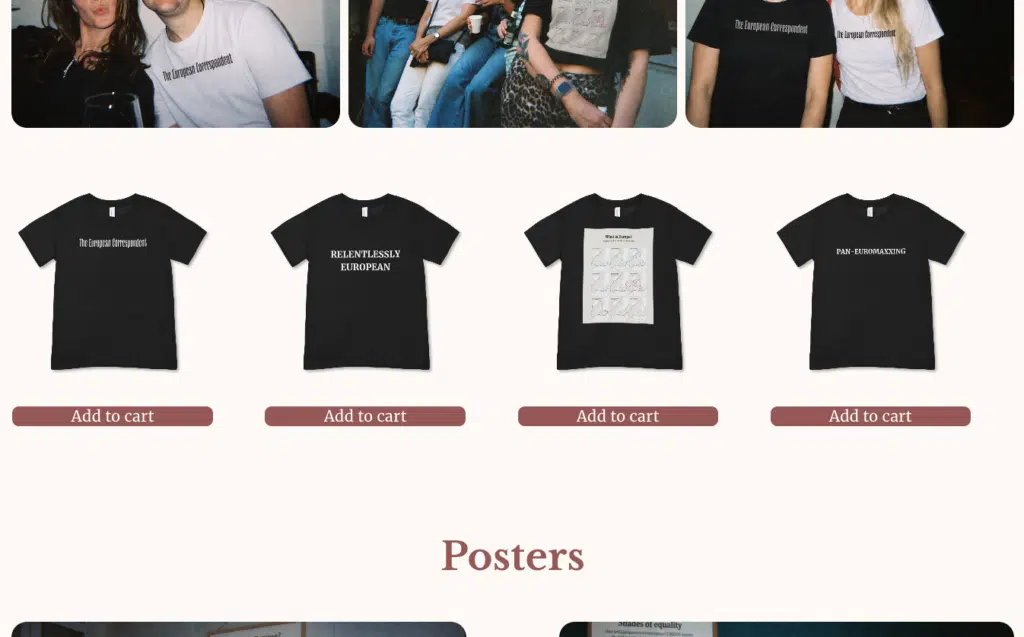
The European Correspondent covers European news through local correspondents based across the continent. The outlet’s merchandise (T-shirts, posters, accessories) helps supplement its business model, which is centered on donations, commercial partnerships, and grants from foundations and European Union calls for proposals.
2. Develop merchandise
Why?
To connect with your target audience, create indirect advertising that builds awareness of your brand, and add value to your media's editorial direction. Branded merchandise in your media's colors is an asset that helps bring people together and promote your work.
When?
Whether it’s for a key date for your media outlet, as a permanent feature on your website to ensure a stable income, or as part of a special event campaign—there are plenty of great opportunities. For example, StreetPress designed a T-shirt specifically for the Fête de l’Huma.
Who is it for?
This could be a gift for employees, your team, or partners; a reward as part of a presale campaign; a prize in a contest—like Arte, which occasionally offers T-shirts or socks as prizes—or something sold to your community.
How?
Do this in a way that reflects who you are and resonates with your community. It’s not about blindly churning out lots of items, but rather about having a message to convey by offering a well-suited, high-quality item that’s locally produced and thoughtfully designed from start to finish.
What products?
These can be printed items: postcards, illustrations, posters, stickers, notebooks, or textiles: embroidered badges, fanny packs, sweaters, socks, or accessories: badges, pins, mugs, pens, keychains, or even food products like chocolate.
Make sure the selected item(s) align not only with your brand image but also with your campaign and the causes you champion to justify the creation of these products. Whatever you choose, it’s important to pay close attention to the visual design to ensure the product is rich and engaging—going beyond simply adding a logo. You can also survey your community on social media to find out what they’d like.
3. How can you develop your merchandise?
The sooner you start, the better. Producing items takes time: market analysis, quotes, samples, marketing, manufacturing, delivery, packaging, labels, shipping… All of these tasks take considerable time that's best planned ahead for.
To get off to a good start, create a reverse schedule—using an Excel document, Google Sheet, or Notion—that takes into account all the necessary elements, including your budget, deadlines, goals, targets, preferences, and so on. Update it regularly as you make progress.
Step 1 — Talk it over with your team
It’s essential to be on the same page about this. Discussing it will help you come up with interesting ideas and share tips and suppliers. You may need to work on this as a team, since it’s a time-consuming task.
Step 2 — Align Your Choices with Your Image and Values
Make sure what you choose is consistent with your brand image. It’s rather inappropriate to offer products manufactured on the other side of the world if you advocate for environmental causes, and it’s generally not advisable to order products from companies that don’t adhere to basic ethical and ecological principles—especially since merchandise is often perceived as wasteful. It’s better to promote local products, made in France or Europe, and work with companies that use sustainable or artisanal materials. Keep in mind that merchandise is a marketing tool—you don’t want it to backfire on you.
Step 3 — Quantify Your Production
To properly prepare for production, you need to know how much is needed. Producing too much or too little could cause you to lose money or waste resources. If you don’t have a clear picture of the quantities—such as in the case of a pre-sale campaign with rewards—try to make educated guesses. If you’re unsure, it’s better to produce too much, provided the products are timeless and therefore reusable (avoid dated or context-specific messages like “Happy New Year 2024”). You can base your estimate on an illustration or a slogan, for example.
As for quantity, the larger your order, the lower the unit cost. It's also worth noting that some companies manufacturing derivative products won't take orders below 100 or even 1,000 units in some cases. You may need to turn to more expensive options if you have a very small quantity to produce.
To anticipate additional costs, quickly integrate shipping into your plan. The larger the item, the higher the shipping rates will be.
Finally, don’t forget to include VAT in your sales price calculation. Please note: Unlike your print publications, which qualify for a super-reduced rate of 2.1%, merchandise (tote bags, mugs, clothing, etc.) are generally subject to the standard 20% VAT rate, except for exceptions provided by law depending on the exact nature of the item. Check online or with your accountant in advance to find out the applicable rate for each product you’re considering, and avoid any unpleasant surprises.
🔎 Learn more: Are you thinking about producing a print version of your publication (poster, fanzine, special edition, etc.) or wondering about the shipping costs for your merchandise? Our guide, “Printing and Distributing Your Magazine: What You Need to Know,” details the administrative procedures (ISSN, ISBN, articles of incorporation) and postal regulations applicable to periodicals—useful for understanding what does (or doesn’t) apply to your merchandise.
4. Our Educational Resource
The Médianes team has prepared a handy document to help you apply the lessons from this fact sheet to your own project.
5. Learn More
We've listed a few recommended suppliers for you:
- merchery: the most original, offering a varied range of options from basic to premium, you'll find all imaginable products here. They also collaborate with brands like Rains, Patagonia and Moleskine. Good customer service, based in Brussels.
- genicado: products made in France and affordable prices, French customer service. CSR commitment and eco-responsible.
- atelierbox: eco-responsible and affordable products. Everything is made in France or Europe. There are also many partner brands.
- saxoprint: printed products (calendars, posters, cards…).
The websites listed here are fairly general; you can also go directly to specialized sites that focus on specific products. Some deal exclusively in clothing, while others focus solely on other items. Always check online reviews—or ask friends and family for their opinions—about the websites you’re considering. This is an industry where you can easily run into scams, defective products, or non-existent customer service—all of which could cause you problems.
✉️ Have you read and used this guide? We'd love to hear your feedback! Do you have a question or comment? Email us at [email protected]. Thank you for your help, the team at Médianes.