No. 50 — Who are you?
It’s February 16, 2023, and you’re reading the newsletter from Médianes.
Today, we’re getting to know each other.
Hello, everyone,
It’s tonight! If you’re in Paris, we’ll see you at La Mercerie (98 rue Oberkampf, 75011 Paris) at 7:30 p.m. for a back-to-school party. Drinks and snacks will be available for the first guests to arrive. Please RSVP.
Back to this issue: Today, Marine Slavitch shares three best practices for conducting an audience analysis and better understanding your audience’s needs.
We also feature an interview with Léa Lejeune, founder of the feminist newsletter Plan Cash, whose business model focuses on training. And in our roundup, you’ll find solutions that any newsroom can implement to combat harassment of journalists, job listings, and our current favorites.
Enjoy the read,
— Marine Doux and Baptiste Thevelein
Why not?
Ideas for Your Media
Tell me what your audience is like, and I’ll tell you who you are. Far be it from us to play the role of media oracle; today, we’re going to stick to the facts. To understand your audience’s habits and needs, there’s nothing like a good old-fashioned survey. The responses will help you develop your media platform alongside your audience.
Before
An initial audience study can be conducted even before a media outlet is launched. Who will listen to our podcast or buy our magazine? What are their needs, financial means, and tastes? These are just some of the questions posed by La Revue Écossaise in their market research. This research even allowed them to lay the groundwork for their community by inviting respondents to follow their project.
During
We sometimes have misconceptions about our audience. An audience study conducted by the feminist magazine *La Déferlante* a year ago revealed to the team that their readers were younger than they had imagined. An audience looking for educational content, reading recommendations, and… a less expensive magazine. This was an opportunity to tailor its offerings to the needs and habits of its audience… and to shape the future of its project together with those most directly involved.
After
Publishing the results of an audience survey is a fitting way to show appreciation to those who took the time to respond: it demonstrates your media outlet’s commitment to its readers, strengthens the bond of trust between you, and fosters a sense of belonging to a community. To fully convince you, take a look at this review of two years of audience research by The Atlantic magazine.
From the studio's perspective
An evening to get to know each other
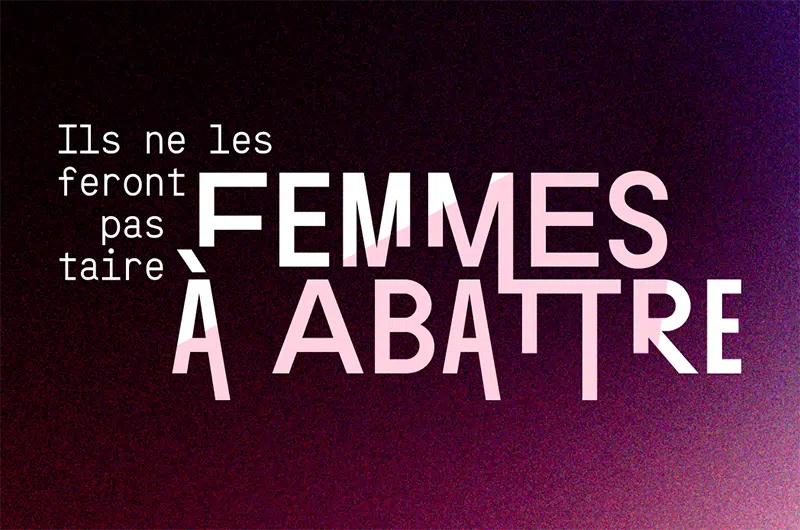
We are delighted to have been able to support the Youpress collective of journalists in launching *Femmes à abattre*, the first international investigation into political femicides.
Starting in the fall of 2021, we supported the team in defining and developing the project: targets, value proposition, manifesto, editorial and business models, and partnerships. We then helped bring the artistic direction to life.
On our Instagram account, we’re taking a look back at the creation of the project’s visual identity: from the logo to the typefaces and the color scheme.
— Marketing, strategy, creative work: Do you have a project? Send us a message!
On Our Radar
Our market monitoring to support your projects
JOSHUA BENTON / NIEMAN LAB – TRANSLATED BY US
THINGS ARE GOING TO GET HEATED
In response to Microsoft, which uses ChatGPT to answer users’ questions on its Bing search engine, Google is launching Bard, its own chatbot. This is a way to avoid redirecting users to links outside the search engine, which would impact media outlets’ online traffic and, consequently, their advertising revenue.
NASEEM S. MILLER / THE JOURNALIST’S RESOURCE
PROTECTING ITS JOURNALISTS
How can newsrooms combat (cyber)harassment of their journalists? Conduct an annual review of digital security, provide subscriptions to a password manager, set up email filters that detect racist and sexist comments… These are all solutions that can be implemented by media organizations of all sizes.
On medianes.org
It's homemade
MARINE SLAVITCH / MEDIANES.ORG
PLAN CASH: WHEN THE NEWSLETTER SETS A PRECEDENT
Léa Lejeune is the co-founder of Plan Cash, a feminist newsletter launched a year ago that helps women invest within their means. In this interview, she shares her experiences and reflections on building a sustainable business model centered on education.
In Brief
That way, you'll know
→ France Médias Monde, INA, Reporterre: These media organizations are hiring. Check out their job openings.
→ Le Monde is opening its doors for a (paid) event featuring journalist Nabil Wakim from the podcast Chaleur Humaine.
→ Do you miss *Les Guignols*? Check out *Les Marioles*: a satirical political show for the Internet age brought to you by Blast.
→ More than 2 million views in just four videos: the remarkable success of the investigative media outlet L’Informé on TikTok, led by journalist Emeline Mauro.
→ Editor's Pick: On Blockbuster Littérature, journalist Marius Rivière recounts the lives of writers as if they were Hollywood movie stars.
See you on March 2!
We’d like to take this opportunity to welcome the teams at Alternatives Économiques, Kessel, and Radio Nova, as well as everyone who has recently subscribed to this newsletter.
Thank you for your messages and ideas, which helped shape this issue of the newsletter. Please feel free to share your feedback with us and let us know what topics you’d like to see covered in future issues!
See you on March 2 for the next edition. Until then, take care of yourselves and your social media.
— THIS NEWSLETTER WAS PREPARED BY MARINE SLAVITCH AND BAPTISTE THEVELEIN, WITH MARINE DOUX, JULIETTE CAHEN, MATHILDE CARLIER, PAULINE BUTEL, AND CHRISTELLE PERRIN.
MEDIANES.ORG — MEDIANES.STUDIO
Médianes is on Instagram, Twitter, and LinkedIn.