While working with journalism and communication students at several schools this year, I helped them develop various media projects. When creating media, audiovisual programs, or podcasts, I encourage students to design them for a specific audience—to “position” them. Very often, they target “young people” or Gen Z and offer short, relatable content for social media that addresses the issue of attention fragmentation. And rightly so, as the latest report from the Reuters Institute shows.
The newsrooms we work with also wantMédianes to reach “young people.” There are many reasons for this: to serve them by keeping them informed, to attract a new audience, to refresh their readership, or to stay connected with new generations.
But one question keeps nagging at me: Who are we talking about? How can we lump all these individuals together? I find myself questioning terms like “young people” and “Gen Z,” and the way we perceive these groups—terms we use without much thought, talking about them more often than we actually talk to them. I’m convinced we’d benefit from refining our perspective and our approaches—by bringing curiosity and an appreciation for complexity to the table—so we can effectively and intelligently connect with people from these generations.
Stereotypes, passed down from generation to generation?
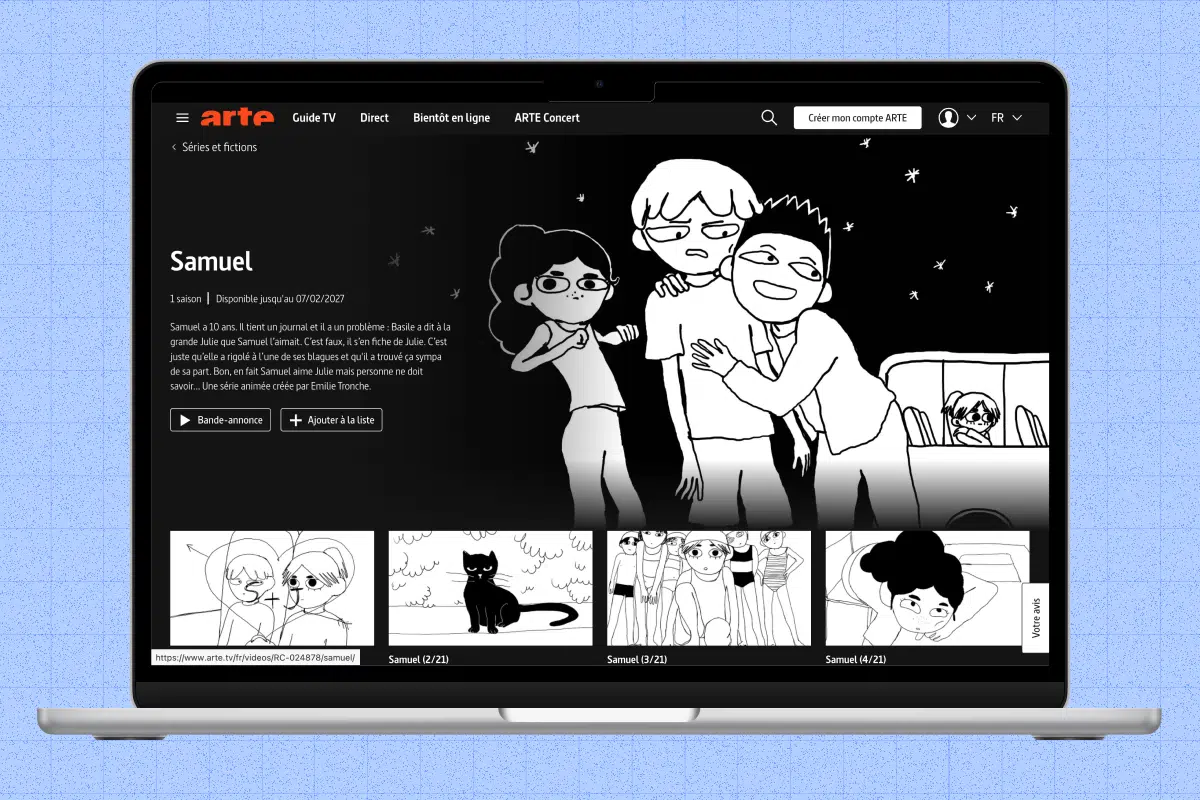
*Be Young and Shut Up* (Payot, 2023) by Salomé Saqué; *Teen Spirits: Inside the Minds of a Misunderstood Generation* by Lennie Stern (Éditions de l’Aube, 2026); and *Les jeunes à table*, the recent summer series from *Le Monde*… In every generation, young people raise questions. Sometimes with tenderness—as in “Samuel,” the hit Arte series (over 55 million cumulative views), which captivated us by immersing us in the mind of a preteen—sometimes with curiosity, and sometimes with concern or contempt, creating the “generation gap”—a concept that defines the baby boomers.
The fact remains that “young people” seem to be a shapeless mass that we need to understand—or even decipher. This quest for understanding is a theme in and of itself. There is a whole body of literature documenting this never-ending quest, whether from a family, professional, or marketing perspective. It seems as though everyone is struggling to decipher something. Besides, we immediately feel old when we talk about “young people,” don’t we?
Si nous pouvons avoir l’impression de nous sentir dépassé·es quel que soit notre âge, c’est peut-être parce que ce mot, « jeunes » recouvre trop de choses, trop de réalités. De qui parlons-nous, alors ? D’une tranche d’âge ? Des « 18-24 » ou des « 25-34 » comme le découpe Meta dans ses tableaux de statistiques ? Des mineurs, à qui l’on vient d’interdire les réseaux sociaux ? De la Gen Z définie comme la génération née entre la fin des années 1990 et 2010 ? Peut-on d’ailleurs parler d’une seule Gen Z, quelle que soit la géographie ?
While every generation has had its share of preconceived notions and stereotypes, I feel that Gen Z breaks all records. Perhaps because it is the first generation whose daily digital habits differ so greatly from those of previous generations. In the past, while parents and children might have watched different TV shows, they still came together, at least for that daily gathering in front of the TV. Today, the shifts in habits run deeper, and the language of our younger generation seems more coded. This is a characteristic that leads the generation itself to stigmatize itself (“We Gen Zers don’t like to think or overcomplicate things when we listen to a podcast,” one student told me). It’s an easy way to define their identity, when the reality of their digital habits is more nuanced and complex.
So, where do we start? How do we actually reach these young audiences?
Use the right criteria
What if we started by using the right words? In marketing, when we talk about a generation, we’re referring to a group of people who grew up during the same era, experiencing the same defining moments (COVID, the Bataclan and Charlie Hebdo attacks, May ’68…), which shape the way they grow up, view the world… and, why not, consume.
It differs from the “age” factor, which refers to the stage of life a person is currently in. While one might consider oneself young at age 13 or 30, these life stages—which are context-dependent—inevitably influence behavioral dynamics. These factors provide useful starting points for thinking about one’s target audiences.
Segment the audience by needs
First of all, stop lumping everyone together. Not all young people are the same. Their habits reflect different needs: entertainment, staying informed, communicating… Spoiler alert: just like everyone else! We must therefore consider their habits, preferences, levels of engagement, and attention spans based on their needs, as well as their levels of awareness regarding a given topic.
Identify personas
As with any product positioning project, the idea is to identify individuals within the group. At [company name]Médianes, we place great emphasis on personas. This is the method I recommend—to target not just “young people” or an entire generation, but a specific type of audience with specific needs. The overarching question, then, would be: what kind of young people can we serve? And then, ask the right questions about positioning: what does this person need? In what context will they spend time with my media (my project/my program, etc.)? On which digital platform? What will their state of mind be like? Is the person already aware of my topic? What is their level of knowledge and expertise?
Ask questions and test
Once you’ve asked yourself these questions in private, the next step is to test them against reality. In addition to monitoring the habits of your target audience, you need to talk to the people involved: ask them what they need, understand their habits, and adjust your assumptions accordingly. Audience research (which can be light and informal) is a valuable tool for refining your knowledge and understanding of your readership.
Rejuvenate Your Team to Rejuvenate Your Audience
Another effective way to attract a younger audience: bring in younger staff. That’s according to FT Strategies. Giving young talent a greater role in driving audience growth works. “While some newsrooms operate under a highly hierarchical structure, entrusting junior staff with leading initiatives aimed at growing the audience helps reduce the risk of alienating the target audience. “The importance of internal diversity and empowering teams is at the heart of our strategic framework (…),” explains the British media outlet.
Embody to Better Represent
What works behind the scenes also works on stage. While rejuvenating the team helps better drive the acquisition of younger audiences, focusing on representation strengthens the connection. Audiences need to feel represented—through faces, voices, and a tone that resonate with them. HugoDécrypte combines these two approaches—a young team and a youthful persona—which partly explains its broad audience: 22% of people under 35 in 2025, double that of TF1 or Le Figaro in this age group, according to the Digital News Report. The 18–24 age group, which places particular value on content creators, finds their content easier to understand (+38 points compared to traditional media) and more authentic (+17 points): two aspects that are very much present at HugoDécrypte and which also explain its success.
Commitment to Transparency
It would be an oversimplification to say that young people are seeking authenticity at a time when artificial intelligence is playing an increasingly prominent role in the media. Young people’s trust in information is deeply complex, multifaceted, and varies according to different factors, such as age, social background, educational level, and so on.
However, it appears that 16- and 17-year-olds are “particularly aware of the difficulty of evaluating information in a general climate of distrust,” according to Anne Cordier, a researcher in Information and Communication Sciences, in The Conversation. By extension, this generation is better able to spot fake news and content generated by artificial intelligence, and is more aware of the associated risks. They seem more inclined to develop critical thinking skills and a fundamental skepticism, which naturally fuels their preference for signs of transparency.
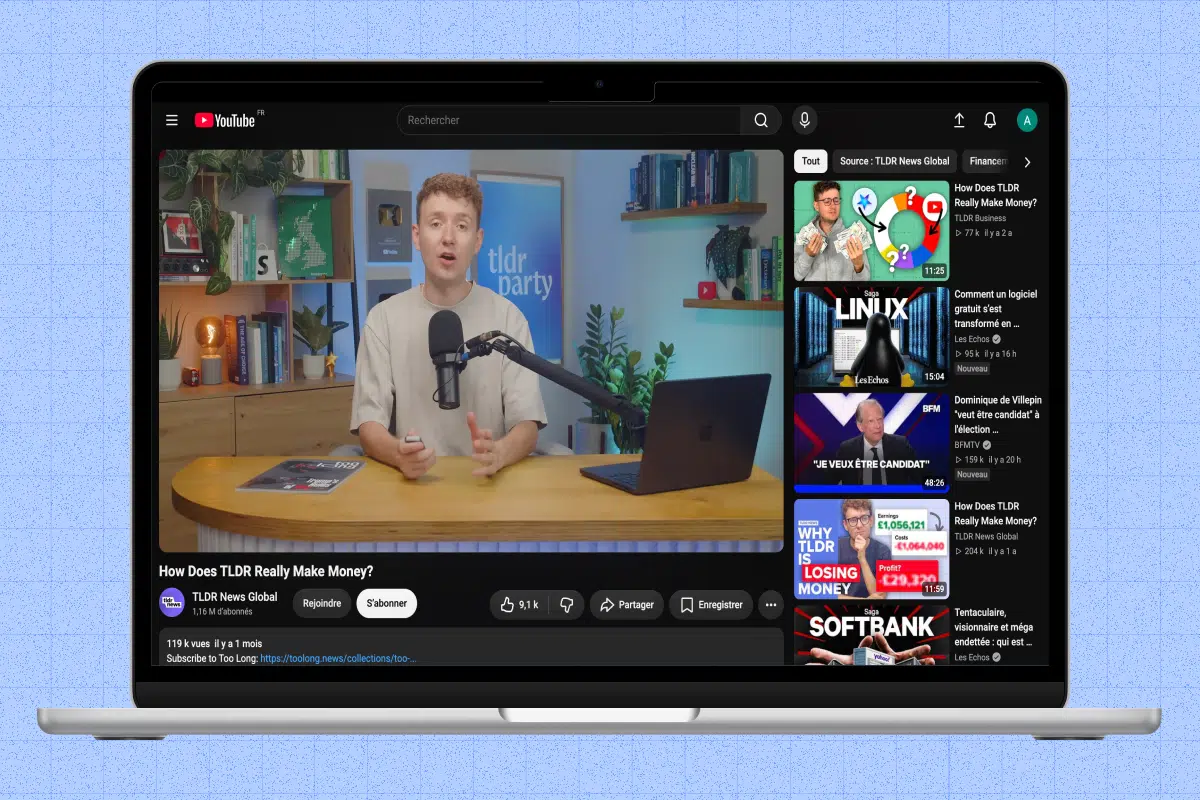
TLDR News, a British media outlet aimed at young audiences, clearly discloses its funding sources and ownership structure—precisely because young audiences care deeply about transparency. Is this a best practice worth emulating in other newsrooms?
Gaining a deeper understanding of your audiences is the foundation of a good marketing strategy. For the media, whose primary role is to inform, the stakes are even higher—especially in today’s ecosystem, which is saturated with artificial intelligence. Moving beyond clichés likely requires less of a specific method and more of a mindset that combines active listening and curiosity.
To go further
- Our practical guide to effectively defining your personas—beyond just age.
- How to conduct an audience study (which could be a conversation with your nephew) to understand your audiences.
- Read the fascinating report, “How Do Young People Stay Informed About Current Events? Surveys on Their Information-Seeking Practices,” published by the Digital Society Lab in June 2025.