Since 2024, he has been coordinatingMédianes Sphera, a network of independent European media outlets that promotes editorial collaboration across Europe (444, El Salto, StreetPress, VD News, etc.). A core belief underlies this collaborative project: by pooling their strengths and resources, independent media outlets are better equipped to stand up to anti-democratic forces. Some have experienced—or are currently experiencing—such challenges and have adapted to far-right regimes as well as to war, and we have much to learn from them.
But how can we effectively guarantee and strengthen this independence—which is not only editorial but also economic and technological? For this new edition, the Sphera Media Lab—organized by Sphera in collaboration with European Lab/Arty Farty—will bring together media outlets from across Europe to discuss these issues and share our solutions to these challenges.
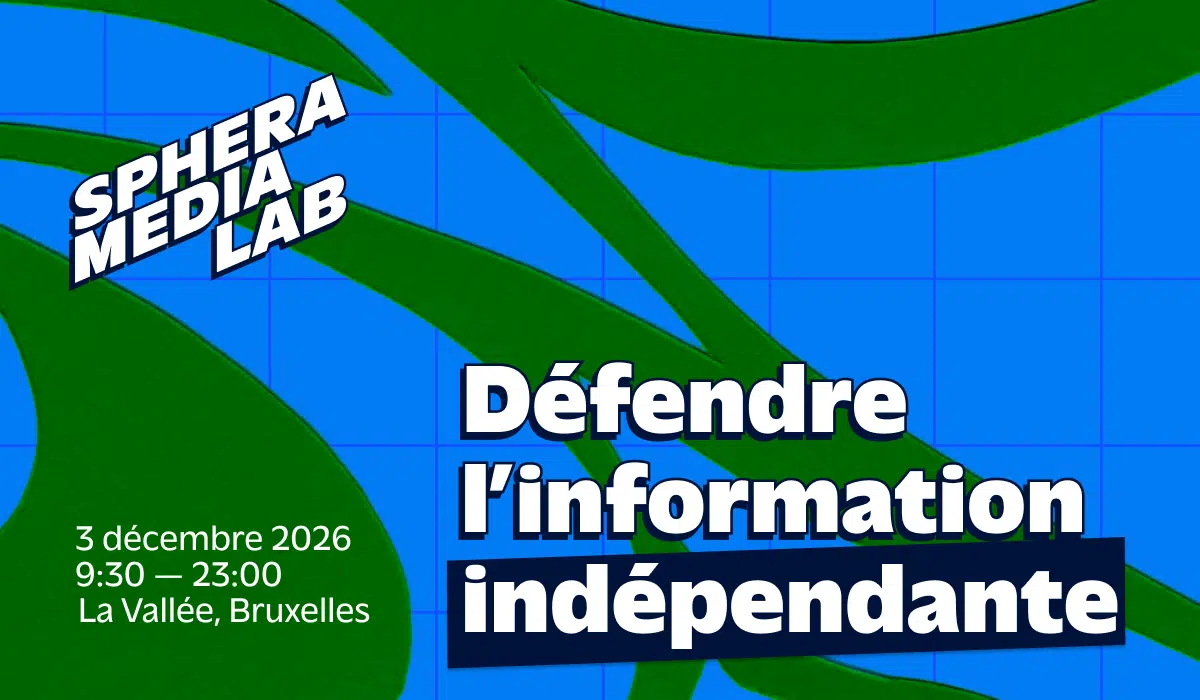
This year, it will take place on December 3, 2026, at LaVallée in Brussels. Throughout the day, you’ll be able to attend keynote speeches, talks, masterclasses, and workshops to develop ideas and concrete solutions to implement within media organizations and newsrooms. The evening will be dedicated to press freedom and will feature, among other things, a screening of the documentary *Sphera*, which documents attacks on freedom of the press in several European countries.
Join us! The event is free and open to everyone upon registration. Please note: The main language of the event will be English, but there will be many French speakers in the audience! You can register for as many sessions as you’d like, but space is limited.
Practical information
📍 LaVallée, 39 Rue Adolphe Lavallée, 1080 Brussels, Belgium
⏰ From 10:30 a.m. to 10:45 p.m.
🎟️ Free, registration required, subject to availability (all sessions, except for the luncheon—which is by invitation only—and the networking session, which is open to everyone)
💌 Want to learn more? If you have any questions, feel free to contact Agathe, Sphera’s Impact ManagerMédianes, at [email protected].
10:30 a.m. – 12:30 p.m. · Workshop · Radio Stations: Economic Independence and Cooperative Models
Independent radio stations are at the heart of creative communities across Europe. They help foster new music scenes, support local artists, and provide a platform for voices that commercial media and public broadcasters often overlook. However, their business models remain fragile, as they rely on a mix of short-term grants, volunteer work, and irregular public funding.
Drawing on research and case studies from the Independent Community Radio Network (ICRN) and the Community Radio Working Group of the Reset! network, this workshop will explore how nonprofit community radio stations in Europe address the issue of their economic sustainability. Various practical approaches will be presented—ranging from membership- and donation-based models to self-generated revenue strategies and cross-sector partnerships—highlighting their potential and limitations.
The workshop will demonstrate that revenue diversification alone is not enough to address the sector’s structural funding shortfall. Community radio stations need dedicated funding mechanisms tailored to their specific needs, which recognize their unique role within the broader cultural and creative ecosystem—not merely as a subset of media policies, but as essential infrastructure for music, art, and local creative communities.
The session will conclude with concrete proposals on what these funding mechanisms might look like, as well as the arguments and leverage needed to convince policymakers and funders.
Featuring: Samantha Lippett (ICRN), Bettina Bence (Lahmacun Radio / ICRN)
10:30 – 11:00 · Keynote · When Gaza Began Reporting on Itself from Within
Since October 2023, coverage of Gaza has profoundly challenged some of the conventional boundaries of journalism. While foreign journalists have largely been prevented from working independently from inside Gaza and local journalists are operating under extraordinary conditions, another form of reporting has become increasingly visible: people who are documenting the war while experiencing it firsthand.
This keynote will explore how citizen journalism and civilian accounts have transformed not only those who tell the story of Gaza, but also what can be told. Alongside airstrikes, victims, and destruction, social media posts began to document access to food, displacement, tents, neighborhoods, family ties, humor, exhaustion, waiting, and attempts to maintain a sense of normalcy. Gaza has thus emerged not only as a scene of catastrophe, but also as a society lived out in everyday life.
This development also raises complex ethical questions. What happens when the witness, the journalist, the source, and the survivor are all the same person? How should we approach verification, consent, the author’s safety, and editorial responsibility? What happens when European media outlets rely on images and testimonies produced by people who are themselves experiencing the events they are documenting?
Featuring: Hala Alnaji (multidisciplinary architect, artist-researcher, educator, and curator)
10:30 – 11:30 · Talk · From Samizdat to the Federation: The Independent Media Landscape in Bulgaria
What can independent media learn from samizdat, this tradition of self-publishing born out of the need to create, share, and circulate content outside established channels? For a long time, communities have relied on pooling resources, mutual aid, and alternative distribution networks to preserve their autonomy.
This talk will explore the landscape of independent media in Bulgaria through the lens of self-publishing, cultural creation, and networking. How can we break free from our dependence on major platforms and build media outlets that are stronger, more collaborative, and more deeply rooted in the communities that sustain them?
From zines and independent publishing to decentralized digital networks, we will explore different ways to produce, disseminate, and preserve independent information.
As trust, visibility, and media business models become increasingly fragile, organizing into a network can be much more than just a technical solution. It is also a way to share resources, strengthen autonomy, disseminate expertise, and build new relationships with audiences.
What can independent media learn from other traditions of cultural creation and resistance? And how can these experiences help shape a more pluralistic, inclusive, and sustainable media landscape in Bulgaria?
Featuring: Desislava Pantcheva (strategic planning and partnerships at the Resonator Foundation, founder of the Artonomy Foundation, and co-founder of the Hip Hip Library)
11:00 a.m. – 11:30 a.m. · Keynote · Karakutu: When Censorship Becomes Evidence
When journalism is suppressed, censored, or made inaccessible, preserving it becomes essential to defending press freedom.
This keynote will present Karakutu, a civic tech project that uses blockchain technology to permanently preserve content from Turkish digital media and shed light on the mechanisms of censorship. Inspired by an airplane’s black box, Karakutu serves as a public, permanent archive of journalistic content that might otherwise disappear, while providing journalists, researchers, and citizens with access to valuable sources.
A digital archive can thus become much more than just a repository: it can serve as a tool for research, transparency, and collective memory. By documenting not only what has been published, but also what has been deleted, modified, or censored, Karakutu provides a better understanding of the mechanisms that shape and control the flow of information.
Featuring: Viera Zuborova (CORRECTIV.Exile)
11:30 a.m. – 12:00 p.m. · Keynote · Creating a Comparison Tool to Cover the Elections
How can independent media help citizens navigate an election without reducing political choices to rankings, polls, or simplified scores?
Komune is developing a comparison tool for the 2027 French presidential election, which compares about 30 candidates against more than 200 laws, decrees, and parliamentary texts. For each candidate, the tool compares what they promise today with what they have actually done: how they voted, what amendments they introduced, and what responsibilities they have held. Each statement links to an identified document: a roll-call vote, a floor debate, or a published platform.
It is in this comparison that the task becomes complex. A candidate who voted one way in 2021 and another way in 2026 may have changed their mind and explained why: this shift may be consistent. Another person may have changed their vote while maintaining the same stance: this discrepancy is of a different nature. Only by comparing promises with actions can these differences be made visible.
This keynote will discuss the development of the tool and the editorial guidelines that govern it: how to choose a reference vote when a text has been reviewed nine times by both chambers, what to say when a candidate has never spoken on a topic, and why we prefer to point this out rather than draw conclusions on their behalf. Readers can thus distinguish between what is documented, what is still being verified, and how each conclusion was reached.
The tool also offers several entry points: by candidate, by topic, or based on a specific situation from readers’ daily lives.
Technology makes it possible to do this work on a large scale. But that doesn’t make it true. We’ll revisit what we’ve learned from trying to hold a data-driven product to the same standards of rigor as journalism—including the mistakes we made and the mechanisms that allowed us to detect them.
Featuring: Jeannette Marié (Komune Media)
11:45 a.m. – 12:45 p.m. · Masterclass · Numerical Modeling as an Investigative Tool
How can computer modeling help us investigate events that are difficult to observe, document, or reconstruct? What happens when visualization becomes a genuine tool for investigation and evidence gathering rather than merely a means of illustration?
This masterclass will explore how digital models can support investigative work by enabling the reconstruction of spaces, the analysis of complex events, and the shedding of light on realities that are difficult to access or are the subject of controversy.
Drawing on methods from forensic and visual investigation, this session will demonstrate how spatial data, architectural modeling, and various digital tools can be used to connect pieces of evidence and reconstruct the facts from fragments of information.
Featuring: Georgia Skartadou (Forensic Architecture Initiative Athens)
12:00 – 12:30 · Keynote • Being an independent creator with journalistic ambitions: How does this differ from “traditional” media?
Who produces and disseminates information today? As journalists and content creators increasingly build their audiences directly on social media, the lines between journalism, commentary, and personal media are becoming more blurred. What happens when an individual becomes both the media outlet and the public face of journalism?
This keynote brings together Marinette (France) and Charlotte Matteini (Italy) to explore how individual creators are transforming the ways we investigate, explain, and share information. By drawing on a personal voice, a direct relationship with their audience, and formats designed for social media, they are developing new ways of practicing journalism.
But this model also raises important questions: How do we define editorial responsibility when the journalist and the media outlet are one and the same? How can creators maintain their credibility and independence while navigating algorithms, monetization, and the pressure to remain visible? And what can traditional media learn from this closeness to their audiences, without neglecting the value of fact-checking, providing context, and editorial responsibility?
Featuring: Marine Perin (@marinetteperin) and Charlotte Matteini (@charlymatt_)
Sign me up
12:30 p.m. – 2:00 p.m. · Lunch · Mapping Sphera's Independent Media Outlets
Want to learn more about your peers? Take part in our media mapping project!
Who are the people and organizations working on similar issues across Europe? Who might inspire you, help you develop your thinking, or become a future partner?
Médianes and Krytyka Polityczna, as part of the Sphera network, led and carried out a mapping project of media outlets and socially engaged creators, with the aim of strengthening the ecosystem of independent and socially engaged news producers across Europe.
This lunch will be an opportunity to participate in the mapping exercise to get to know your peers, share your experiences, and explore what we can learn from one another. Because knowing who else is out there—in your own country or elsewhere in Europe—is the first step toward working better together.
To wrap up the session, we’ll invite you to meet your neighbors and imagine together what the map might look like if it came to life.
By invitation only.
2:00 p.m. – 3:00 p.m. · Speedmeeting
Want to meet the people who keep independent media alive? Come spend an inspiring hour with several key players in the industry.
3:00 p.m. – 4:30 p.m. · Workshop · New Tools, New Challenges, New Revenue Streams: Rethinking Donations
Donations are now an essential source of funding for many independent media outlets, as well as for well-established publications like The Guardian, which has 1.4 million regular digital supporters. Yet this is just one example among many. Donations can play a decisive role in the development of a media outlet, but this source of funding remains fragile: it depends above all on the ability to create, maintain, and nurture a relationship of trust with its community.
At the same time, the rise of AI and changing user habits are revolutionizing the way audiences discover and consume information, while major digital platforms capture an ever-greater share of their attention. To preserve their independence, media outlets must be able to control their own tools and, above all, maintain a direct connection with their audiences.
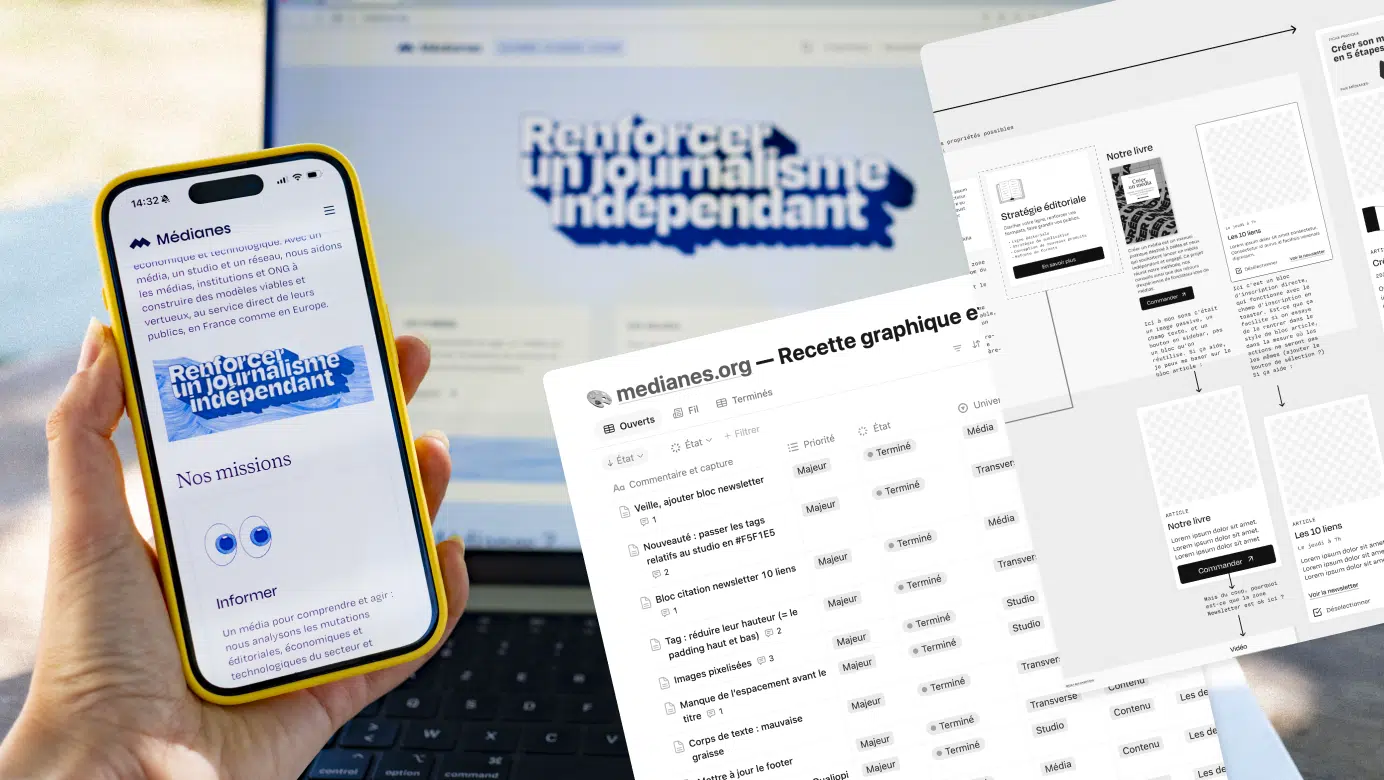
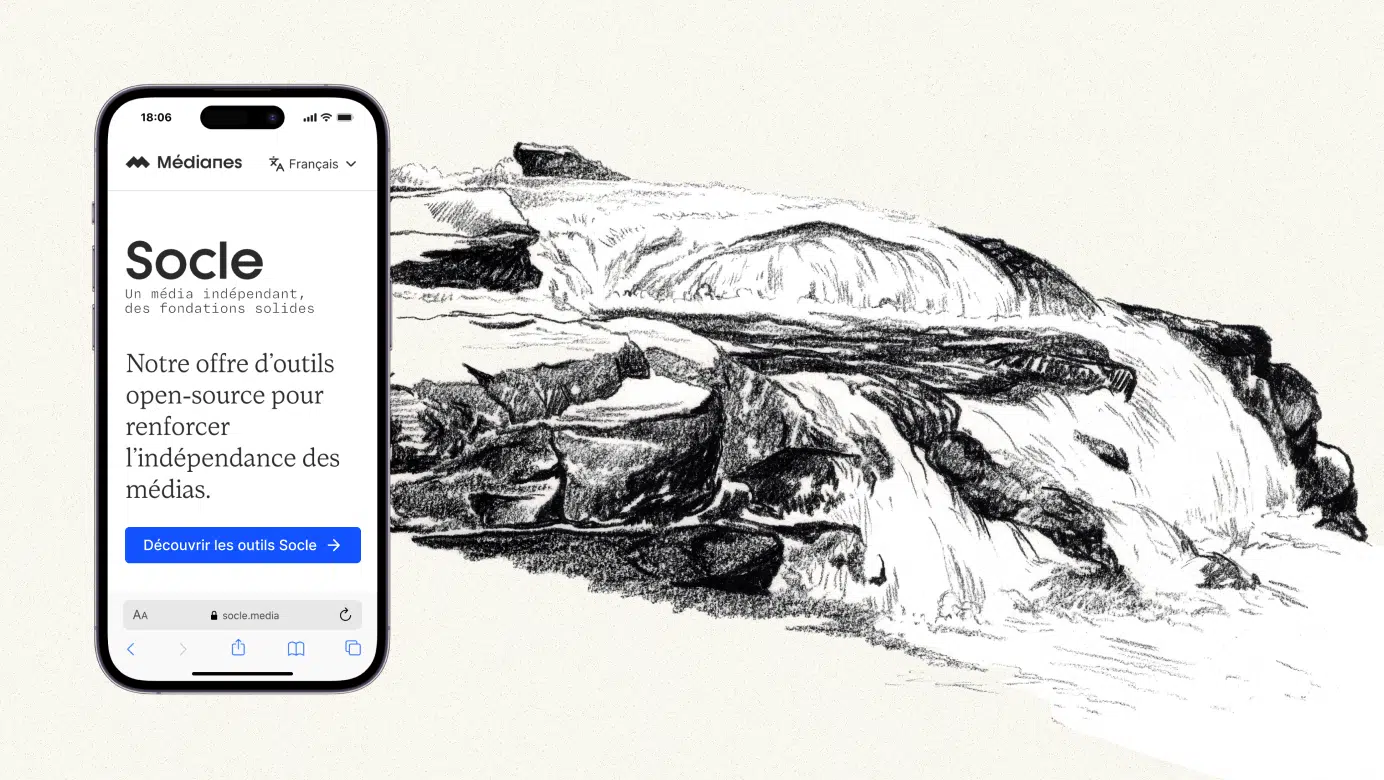
Since 2020, we have been Médianessupporting media organizations in France and across Europe with a single goal: to strengthen their independence—whether editorial, financial, or technological. We have helped launch several media outlets and assisted others in securing the necessary funding to get started or continue their operations.
As a follow-up to this work, [Médianesorganization] developed Socle Dons, a tool designed to enable media outlets to easily collect and manage one-time or recurring donations.
Starring: Baptiste Thevelein (Médianes)
3:00 p.m. – 4:00 p.m. · Masterclass · Feminist media, AI-generated content, virality, and access to information
What is becoming of feminist media at a time when AI-generated content and formats designed to go “viral” through algorithms are transforming the way audiences access information? And how can independent media navigate algorithms without becoming dependent on them?
Drawing on six years of experience at Lazy Women, this masterclass will explore the practical tensions between editorial integrity, audience reach, and dependence on platforms. It will examine the influence of social media algorithms on editorial decisions, the realities of shadowbanning (particularly for feminist and political content), and the strategies independent media outlets can develop to remain visible without compromising their values.
Using examples of campaigns and content that have reached a wide audience while maintaining a clear editorial direction, this session will explore how to create impactful and easily shareable content without letting “what works” become the sole editorial criterion. It will also offer practical guidelines for developing a social media editorial strategy that fosters engagement, without resorting to clickbait or turning media outlets into content factories.
The masterclass will include an open discussion on the frustrations, contradictions, and creative possibilities inherent in platform-dependent media, as well as the implications of remaining independent in an information landscape shaped by algorithms.
Featuring: Teodora Strugaru & Zsofi Borsi (Lazy Women)
3:00 p.m. – 4:00 p.m. · Roundtable · Editorial Independence and the Magazine as a “Counter-Archive”
Independent media play a vital role in shaping how stories are remembered, in determining who is allowed to tell a story, and in deciding which forms of knowledge remain visible. Editorial work can be more than just the production of information: it can help preserve cultural memory, establish the legitimacy of certain narratives, and build infrastructure that enables communities to document their own history.
This roundtable will explore how independent media can serve as counter-archives—by creating spaces where forgotten stories, cultural practices, and lived experiences are documented, contextualized, and remain accessible beyond the news cycle. It will examine how editorial choices shape collective memory, what forms of knowledge are considered legitimate, and how independent media can challenge dominant narratives without reproducing the same structures of exclusion.
The discussion will also focus on the infrastructure that makes this work possible. From archives to shared digital tools, including collective forms of management, technological independence is not just about owning or controlling a platform. It can also mean building interdependent systems in which knowledge, resources, and responsibilities are shared.
Featuring: Vera Zalutskaya (MOST Magazine), Jack Murray-Brown (ICRN / Refuge Worldwide), Arysia Chernobai (Lyuk Media)
4:00 p.m. – 4:30 p.m. · Keynote · Protecting Your Website and Data as an Independent Media Outlet
For an independent media outlet, securing its website is not just about protecting itself against attacks. It’s also about protecting the people who visit the site, the journalists who use it every day, and, more broadly, the editorial independence of the newsroom.
Drawing on Medfeminiswiya’s experience, this session will demonstrate how to make informed technical decisions to make your website more secure and robust, while taking into account the very real constraints of budget, time, and human resources that independent media organizations face.
Hosting, infrastructure, tools, and services: Which options should you prioritize to better protect your media outlet and its audiences? What investments are truly necessary? And how can you achieve the right level of security without committing disproportionate resources?
Rather than offering a one-size-fits-all solution, this session will share practical lessons learned from the experience of an independent media outlet: what deserves to be prioritized, where it’s best to invest, and the solutions that remain accessible to a small newsroom.
Featuring: Safaa Boubia (Medfeminiswiya)
4:45 p.m. – 6:00 p.m. · Interactive Discussion · With or Without Digital Technology? Building a Community Around a Media Outlet
What happens when independent media step away from their screens to connect with their audiences? As journalism is increasingly shaped by platforms, metrics, and fragmented attention, can in-person encounters help rebuild trust, strengthen communities, and make media more sustainable?
This conversation will bring together three examples of community-building that go beyond digital publishing: StreetPress’s “Club,” which turns readers into active supporters and participants in the editorial process; n-ost’s “kitchen discussions,” where journalists, media professionals, and the public gather around a table to discuss journalism and its impact; and Denník N’s events, which bring readers into direct contact with the people and ideas behind the news.
The discussion will focus on determining what independent media stands to gain by stepping outside the virtual world: Does meeting readers in person build trust? Can events become a form of journalism in their own right? How can physical communities support editorial independence and long-term sustainability? And what can media organizations learn from the people who show up, listen, ask questions, and choose to stay?
Featuring: Martin Bodrero (StreetPress), Joanna Kopacka (n-ost), Tomáš Bella (Denník N). Moderator: Agathe Kupfer (Médianes)
6:55 p.m. – 7:55 p.m. · Premiere of the documentary *Sphera* on press freedom in Europe
Freedom of the press is not limited to the right to express oneself. It also depends on the conditions that allow journalists to continue asking questions. In Europe, where press freedom is often taken for granted, journalists can still face surveillance, judicial intimidation, physical attacks, economic pressure, and interference in their work.
Greece, Poland, France, and Italy: Through the stories of four journalists, this documentary explores various manifestations of a broader threat to press freedom in Europe. A journey that reveals what happens when journalists are no longer free to do their jobs, and the consequences this has on how we understand the world around us.
Directors: Maria Russo and Massimo Bologna (VD News), in collaboration with StreetPress and Médianes
8:00 p.m. – 8:45 p.m. · Talk · Sharing Information Is an Act of Resistance
Independent journalism is increasingly practiced under pressure. Political interference, legal threats, economic pressures, intimidation, and attacks on journalists—all of these factors can limit their ability to investigate, challenge those in power, and report freely. Yet, throughout Europe and beyond, journalists continue to defend their right to tell stories that, without them, would sometimes remain hidden.
As these pressures take on new and increasingly sophisticated forms, it is more urgent than ever to strengthen protections and solidarity for independent journalism. Protecting media independence and the safety of journalists is essential, not only to guarantee press freedom, but also to preserve the public’s right to information and the vitality of our democracies.
Supporting those who report the news means defending the space necessary for democratic oversight and the expression of a diversity of voices.
Featuring: Thodoris Chondrogiannos (Inside Story), Hélène Servel (freelance journalist) Moderator: Andreas Lamm (European Center for Press and Media Freedom)
8:45 p.m. – 10:45 p.m. · Networking & Music
Open to everyone; no registration required.