When we talk about the discontinuation of a media outlet or an editorial format, we tend to think of a financial failure, an audience that didn’t show up, or difficulties related to the economic crisis. However, bringing a project to a close can also be the key to its success. What if all good things really do come to an end?
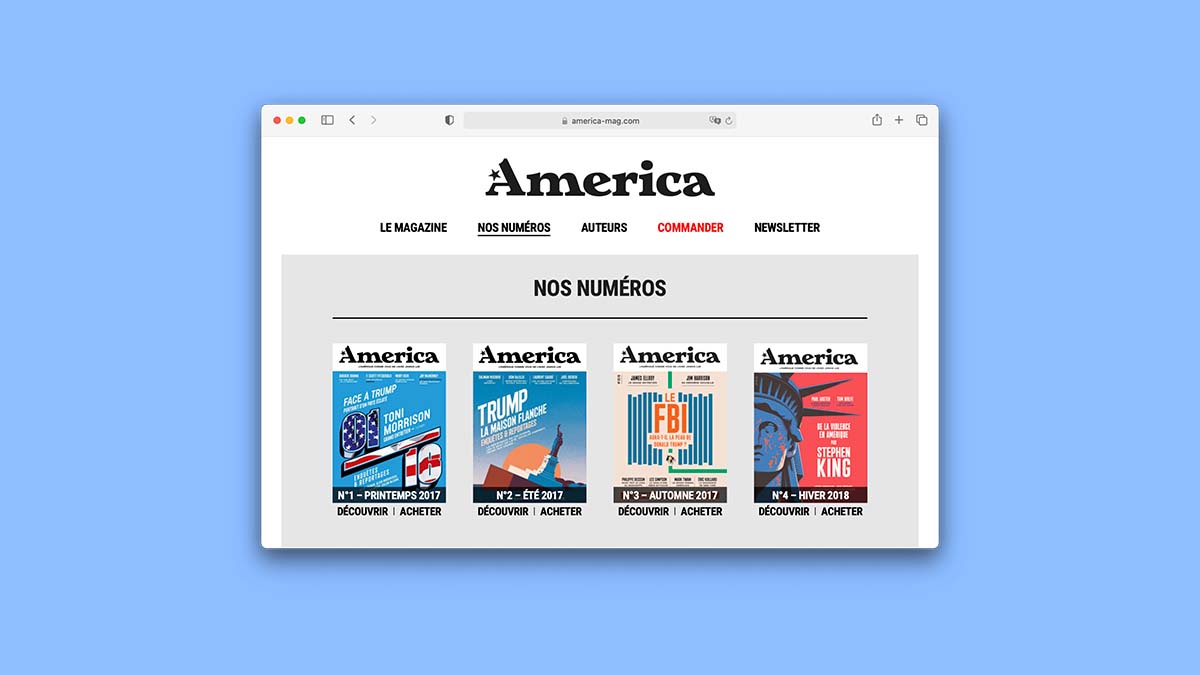
François Busnel and Éric Fottorino had announced it right from the launch of *America*. This magazine, designed to make us reflect on Donald Trump’s America, kept us captivated for sixteen issues. Four issues a year for four years: the duration of a presidential term. Here, we envision the magazine as a collector’s item. A finished product, in short, with a strategy that allows for deeper reflection on its value proposition and business model. This is enough to make readers want to linger over each precious issue and savor the snapshot of an era without getting lost in the clamour of current events. Results: nearly 500,000 copies sold over four years.
You can also imagine the very end, even when it wasn’t part of the original plan. To go out in the height of glory—it’s got to be said—that’s quite something. Take Siham Jibril, founder of Génération XX, the podcast that shares the life stories of women, helping listeners broaden their horizons… After four years on the air and more than six million listens, Siham Jibril has decided to wrap up her podcast following the release of the 100th episode. She’s taking a break to turn a new page and is starting to lay the groundwork with the launch of a magazine dedicated to listening.
We’re not going to pull the wool over your eyes. More often than not, in the media, the end is neither planned nor desired. It’s a decision we come to when the obstacles become too great and solutions are lacking. In such cases, some choose to (properly) explain this decision, without trying to hide it. Take Stanislas Signoud, co-founder of the personalized morning audio show Les Croissants. First, he published an explanatory letter on the Les Croissants website. Then, a year later, via a Twitter thread recounting the end of the project from the entrepreneur’s perspective—from the court hearing to the transfer of Les Croissants subscriptions to Les Jours. An honest and necessary look back.