
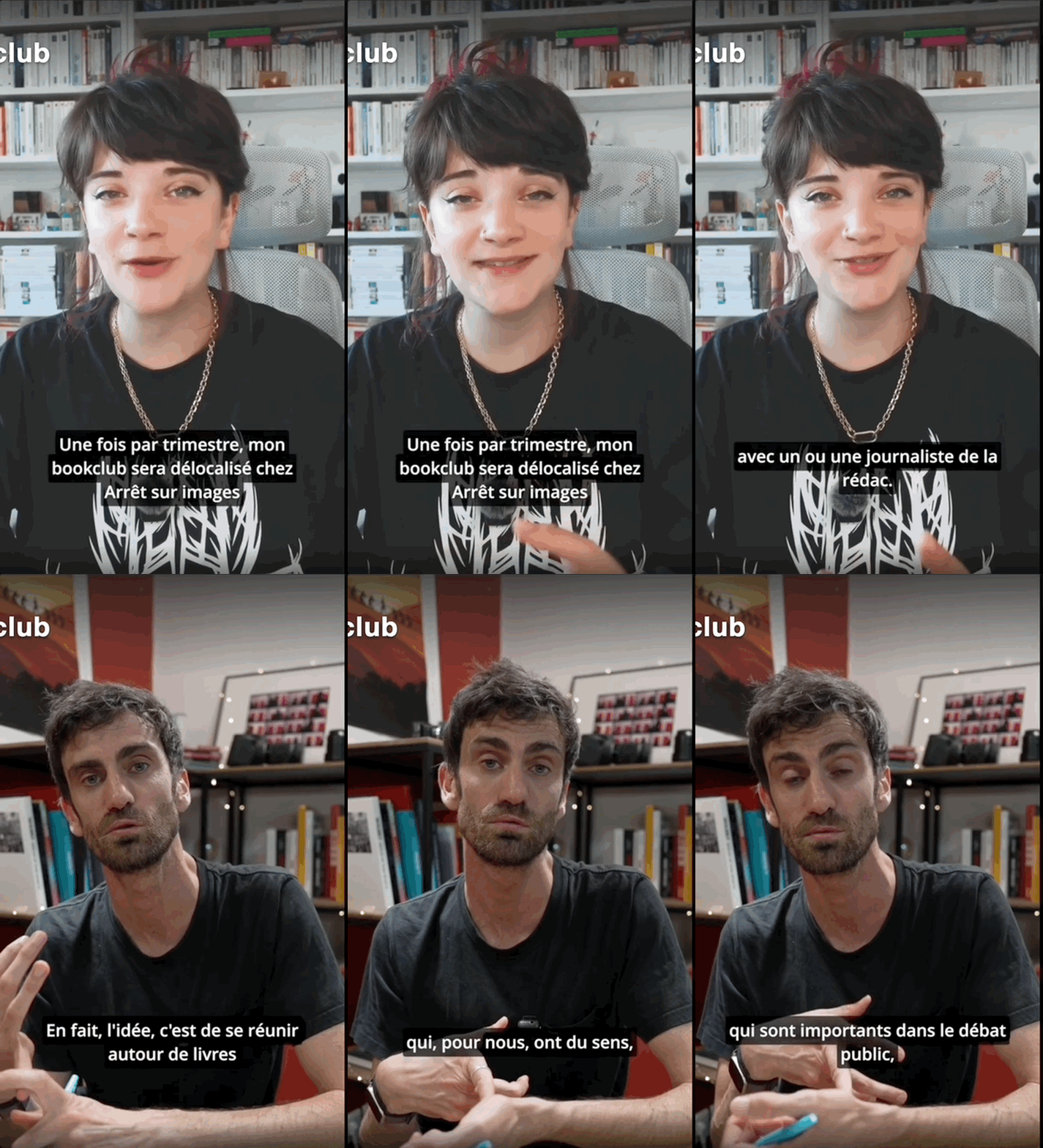
Patrick Champagne’s *La double dépendance*, Thierry Discepolo’s *La trahison des éditeurs*, and Antonio Gramsci’s *Le journalisme intégral*: the selection of books leaves little doubt as to the identity of the latest French media outlet to have recently launched its book club… It is indeed *Arrêt sur images**, a media outlet dedicated to media analysis and criticism that has just launched this new offering—already very popular among celebrities and influencers—and which is slowly making its way into newsrooms: a month before ASI, the American media outlet WIRED also launched its own club dedicated to tech. As for Arrêt sur images, the first three books proposed by the editorial team also focus on the outlet’s favorite topics and were put to a public vote so that one of them could be read by the community over the summer. For this first edition, Antonio Gramsci received the most votes. His book will be the subject of a discussion in September, streamed live on the outlet’s YouTube and Twitch channels, featuring literary videographer Margorito and a journalist from the editorial team.
This is a new initiative in several respects, one that directly addresses the challenges facing ASI. For beyond the editorial value of this initiative, the stakes are also strategic for a media outlet that hopes, through the club, to rejuvenate, unite, and build loyalty among its community—which, through subscriptions and donations, forms the foundation of its business model. The Arrêt sur images book club embodies a broader strategic challenge for media outlets: that of a democratic reflection on their role in the production and dissemination of information at a time when digital habits are transforming the ways in which media is consumed.
Reaching a Younger Audience Through New Entry Points
A few years ago, it might have been surprising for an online media outlet to rely on literature and print books to bring its community together; in 2026, this approach is no longer surprising at all. Contrary to popular belief, books have not been consigned to oblivion by the “social media” generation. It is precisely these platforms—first and foremost through the BookTok phenomenon—as well as public figures like the artist Dua Lipa with her hugely popular Service95 Book Club, and sports and fashion figures such as Victor Wembanyama, that have helped disprove the predictions of those who foretold a grim fate for books in the face of the Internet’s rise. At the same time, books have become an escape from an all-digital world that has become a source of anxiety, reigniting interest in tangible cultural media.
A resurgence in the popularity of books is something *Arrêt sur images* intends to capitalize on; one of the publication’s major challenges is reaching an audience younger than its current subscriber base, says Sophie Roncetto, the publication’s communications and marketing manager. By collaborating with a content creator whose audience is younger, the outlet hopes to reach new demographics, explains Roncetto, who also sees the book club as a space conducive to community engagement: “Our goal in starting a book club was precisely to create a format that would allow for a bit more interaction with the community—to provide slightly different opportunities to meet and discuss things together.”
To achieve this, the media outlet plans to make the book club a “new gateway” for “Asinauts,” she explains—the name given to members of the media outlet’s community. The book club is thus accessible to non-subscribers: a strategy that WIRED has also adopted, making the book club newsletter free to subscribe to, unlike some of its other newsletters.
 Agathe Kupfer
The Arrêt sur images Discord server, which was originally launched in 2022, serves as a space to vote on books and discuss the selection. It is also open to non-subscribers and serves as a strategic gateway to the outlet’s overall content. While one of the discussion channels is dedicated to the book club, the others are devoted to typos spotted by readers in articles, news items found by the community in other media outlets, and discussions about certain programs produced by the editorial team. This is the case for the bi-monthly program *Proxy*, whose host, Loris Guémart, occasionally visits the dedicated channel to answer questions or share information. By joining Discord, a newcomer is thus immediately exposed to the rest of ASI’s content and community.
"Revitalize"
A few weeks after its official launch, the enthusiasm has exceeded expectations, Sophie Roncetto notes with satisfaction: “We have nearly 500 people joining the Discord server for the book club, even though we’d set a lower goal because we didn’t think we’d attract so many people right away. The feedback we’ve been getting has been incredibly positive: even on the video we posted on Instagram, we didn’t expect to get this much response before the first live stream. For now, we’re happy.”
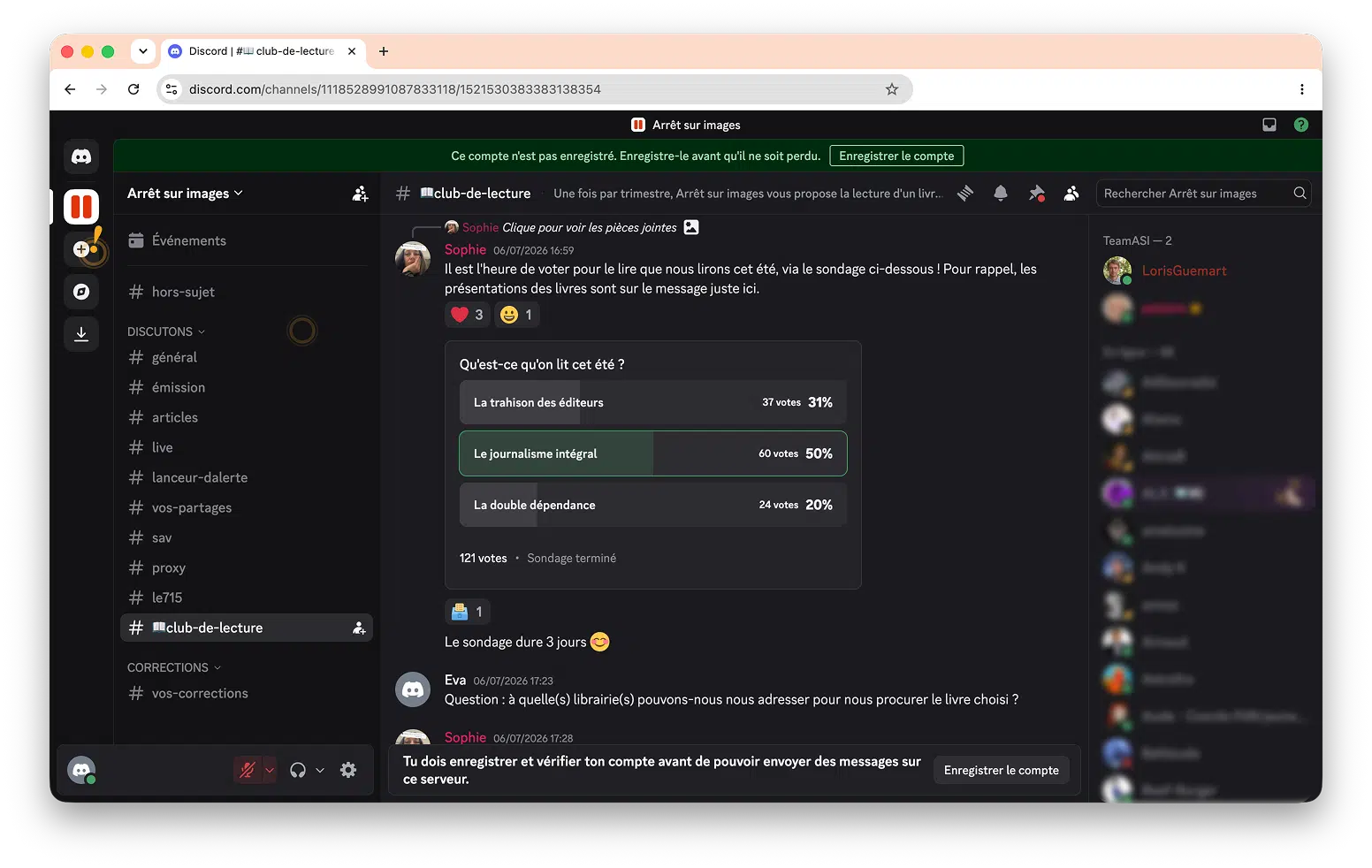
The media outlet’s Discord server isn’t the only channel that Arrêt sur images plans to revitalize through the book club. The outlet also plans to use this new “native” format to breathe new life into its somewhat neglected YouTube channel by making replays of the live book club episodes available there. This is harder to do with its regular shows, explains Sophie Roncetto: “We’re big believers in having formats that really add value—ones that aren’t just teasers for our articles and content. It’s a bit complicated for us to keep the YouTube channel updated because, for example, with our shows—since they always include clips from other media— we get flagged (an automatic notification from the platform for using copyrighted content, which can lead to the video being taken down—Editor’s note).” By adding this new format to its YouTube channel, the editorial team hopes to reach a new audience beyond its website, thanks to a recurring series tailored to the platform’s conventions.
Collaborating with a videographer—but not just any old way
The decision to co-create the book club with videographer Margorito was by no means a coincidence. The media outlet had initially planned to collaborate with the literary videographer—who already runs her own book club—on more traditional columns, given her interest in topics aligned with the outlet’s editorial focus. The project ultimately evolved into a book club, for which the videographer is paid like any other freelancer, confirms Sophie Roncetto: “We’re testing this out for a year, once a quarter. After that, we’ll take stock to see if it’s working or not.” ” To “lighten the workload” for Margorito, the Arrêt sur images team is handling the communication and preparation of materials related to the format.
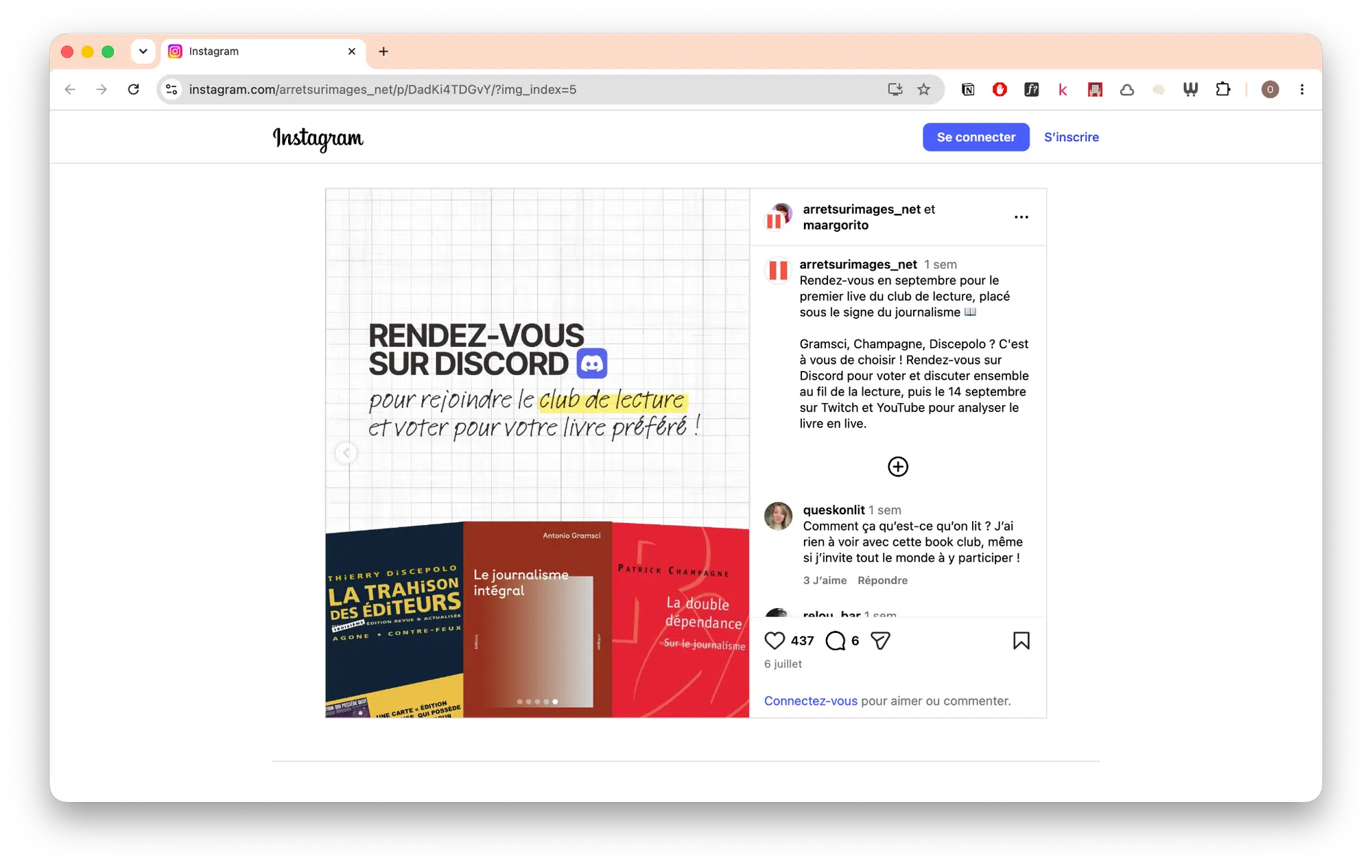
This isn’t the first time the online media outlet has worked with figures associated with the broad and nebulous label of “content creation,” such as videographer Adam Bros, who regularly explores the world of content creators and influencers for the outlet. But the book club remains the first large-scale project carried out in direct collaboration. While Margorito was an obvious choice for the outlet—which sees a natural overlap between their respective topics and, therefore, their audiences—the broader role of content creators in ASI’s strategy remains less clear-cut. For Arrêt sur images, a media outlet that regularly analyzes this space, the question centers in particular on the distance to maintain from potential partners who could also become subjects of journalistic coverage. When asked about the growing interest in these profiles—from both the media and the political sphere—Sophie Roncetto acknowledges that it’s not a given for journalists, though she doesn’t want to close the door: “I’d actually like us to move more in that direction. We’ve created a sort of benchmark of people who could potentially align with our work,” though she clarifies that nothing concrete is planned at this stage.
 Owen Huchon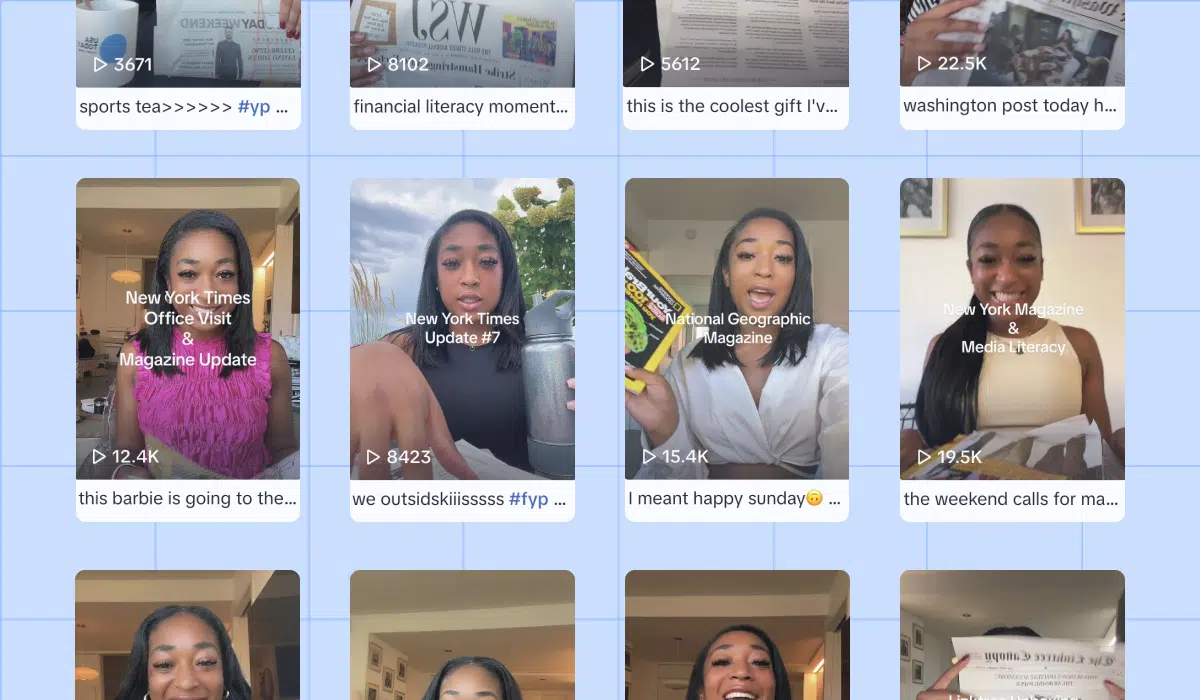
Influencers have long played a role in media strategies, but their influence has continued to grow in recent years. As early as 2023, Kelsey Russell, then a sociology student, had caught the attention of several American media outlets for her press roundup on TikTok; some sent her socks, mugs, and invitations to visit their newsrooms in hopes of reaching a Gen Z audience. In France, more recently, several media outlets, such as Mediapart, have relied on similar profiles to boost the reach of their work, as reported by Rembobine. According to the latest Digital News Report from the Reuters Institute, 27% of those surveyed now say they get their news each week from “news creators .” More than ever, the press is grappling with the question of whether—and to what extent—it should align itself with content creators and influencers, as well as with digital strategies based on greater personalization and the adoption of certain trends, without compromising ethical standards. Regardless of the potential these figures may represent, the team at Arrêt sur images agrees on one point: it rejects purely promotional collaborations and prioritizes substantive partnerships that offer editorial value.
A Discord feature: convenient, but not universally popular
It’s ironic: the book club, usually seen as an escape from technology, has reignited debates at *Arrêt sur images* about the tools it uses to distribute and showcase its work. While the project has clearly energized ASI’s Discord server, this new influx of users doesn’t mean everyone is enthusiastic. On the page announcing the project, the media outlet’s website—which deserves credit for being one of the last to maintain a comments section—has become a venting ground for some subscribers who are disconcerted by the idea of having to join Discord, whether due to unfamiliarity with its conventions, a lack of technical skills, or mistrust of a new American tech platform.
This response didn’t come as a surprise to the editorial team, explains Sophie Roncetto. “Even when we launched the Arrêt sur images Discord server, we got some similar feedback,” she recalls. For ASI, as for other newsrooms seeking to attract and diversify their audience—particularly among younger people—the question of technical independence arises: which platform to use, for what purposes, and under what terms? For the more “free software advocates” in the community, a book club hosted on YouTube (Google), Twitch (Amazon), and Discord would likely raise some concerns. Sophie Roncetto justifies the choice of the American discussion platform on pragmatic grounds and to avoid spreading votes across multiple channels: “It seemed a little odd to us to ask the Margorito community to come to the site’s forum. It’s not necessarily an ideal space, but we also didn’t want to create too many different spaces—at least for voting and regular discussion, which will take place on Discord.”
 Owen Huchon
The editorial team says it remains attentive to these issues—whether on Discord, Twitch, or Instagram—and continues to explore more open alternatives, as evidenced by its switch from DailyMotion to PeerTube (a decentralized alternative to YouTube) to host the site’s shows and videos. “We’re trying to change whatever we can to move toward more open, more ethical solutions. We’re doing it, but there isn’t always a satisfactory alternative,” confirms Sophie Roncetto, also citing their recent decision to leave X, after initially choosing to maintain a presence there. The media outlet is exploring other ways to share information about the book club, particularly through its website.
* Médianes, the studio, supported Arrêt sur images in its strategic development.