

? The third episode of our case study series, which each month explores the practices and strategies of Europe’s independent press, along with our advice on how to implement them: technological independence, business models, diversification of content… This series is produced as part of our European media network, Sphera, and is aimed at media executives and creators across Europe.
Don’t want to miss the next one? Sign up for our newsletter.
Although often associated with influencers and content creators, video is a format that the media is increasingly embracing. Where print—and later, gradually, the web—dominated for many years, the era of social media platforms—and with them, video—has now arrived. For the first time in 2026, social media and video streaming platforms are the most common way worldwide to access news online, ahead of the media outlets’ own websites and apps, according to the latest Digital News Report.
At first glance, it doesn’t take much to get started: a phone with a camera, an app that generates captions, and editing software. While all of this may seem very simple—and perhaps tempting for many newsrooms—incorporating video into your content requires a real strategy. Making a video isn’t just about “filming an article”; it’s a standalone editorial format that must be approached as such. Video can be used to repurpose existing content—and this is often the first instinct for newsrooms—but this strategy is limiting and does not allow you to fully leverage the format. Embarking on these new productions involves new roles, new production schedules, technical investments, and editorial decisions.
1. Does this apply to me?
The first question to ask yourself is: Why do you want to incorporate video into your editorial content? Is it to reach a new audience or to highlight a specific aspect of your editorial focus? There are countless reasons to get started with video—and countless ways to do it. Beyond the formats themselves, you also need to decide where to distribute them. Social media platforms, with their ease of use and large user base, seem like an obvious choice, but you could also choose to publish your videos on your own websites.
1.a Building Awareness and Brand Recognition: If your target audience is active on one or more social media platforms, the question to ask yourself is simple: What could you post there to help them recognize your brand? These platforms are a great way to gain visibility, provided you’re seen there regularly. They allow you to reach both your existing audience and attract new ones.
The Good Idea
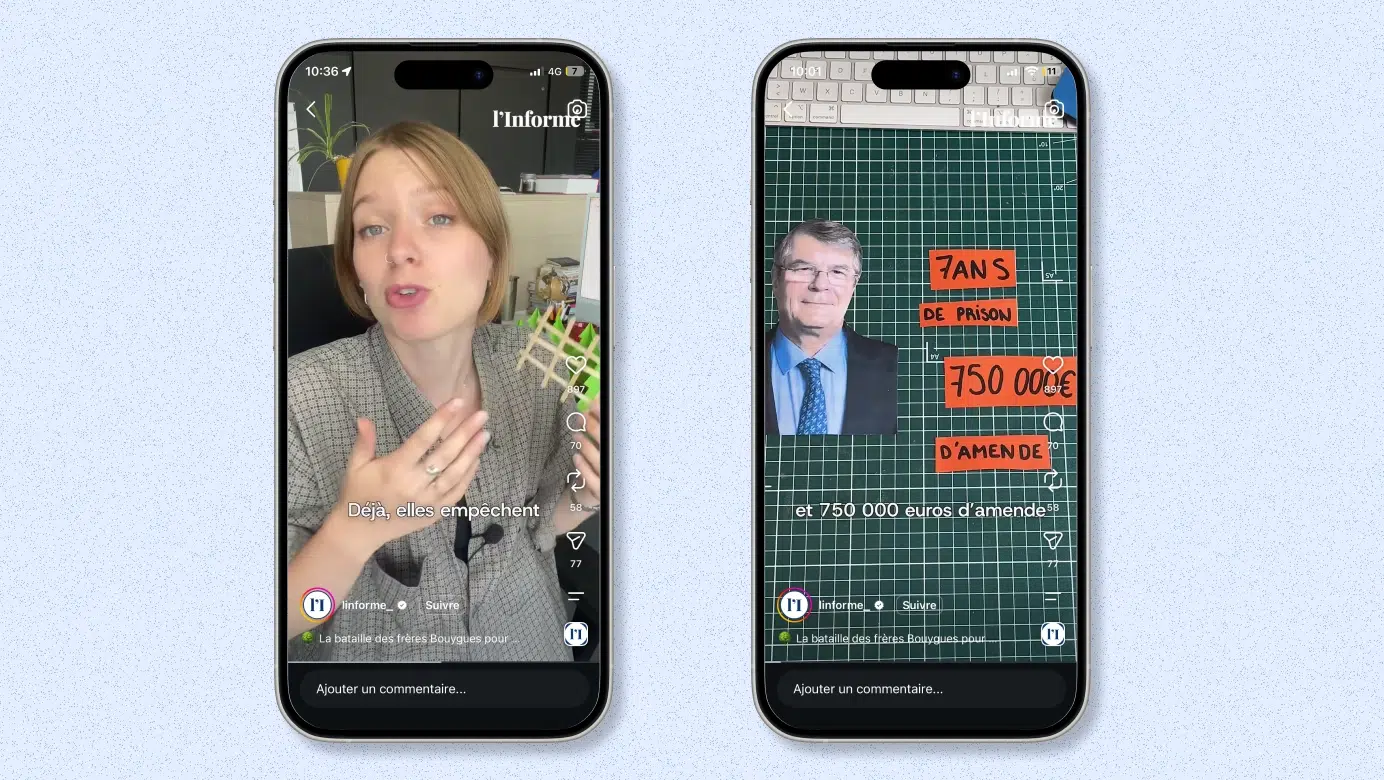
On L’Informé’s Instagram account, two journalists, facing the camera, discuss the in-depth investigations published by the outlet. Using diagrams and cut-out figures—created by hand rather than digitally—the videos provide a concrete and educational illustration of the outlet’s investigative work.
1.b Strengthen the bond of trust with subscribers: Video also allows for a more personal connection. In a context where trust in the media is fragile, putting a face to the news helps make journalistic work more human and accessible. Speaking directly to your audience, facing the camera, creates a sense of closeness that written content doesn’t always allow for: people no longer just follow a media outlet, but rather individuals they can identify with and trust. This is especially true on social media, where content featuring real people generally generates more engagement.
The Good Idea
Some TV show hosts, such as Élise Lucet on “Cash Investigation” on France 2, have their own social media accounts designed to complement the program. Posted on the journalist’s account, as well as on those of France Télévisions and Cash Investigation, the videos offer a preview of the topic to be covered in her upcoming episode. These videos allow the journalist to speak directly to her audience. In some, she addresses an issue in an educational manner by choosing a topic that directly relates to her audience’s consumption habits. In others, she takes viewers behind the scenes of the show and her profession.
1.c Reaching a Younger Audience: Younger generations primarily get their news through social media, particularly through video and shorter formats. 64% of 18- to 24-year-olds get their news through social media, with Instagram and TikTok leading the way, followed by YouTube. If you want to broaden your target audience to include younger people, or target a segment of the youth demographic, video is an essential starting point. This audience particularly appreciates content featuring real people, especially those who resemble them. Young journalists often succeed in capturing their audience’s attention, as viewers identify more easily with people from their own generation.
The Good Idea
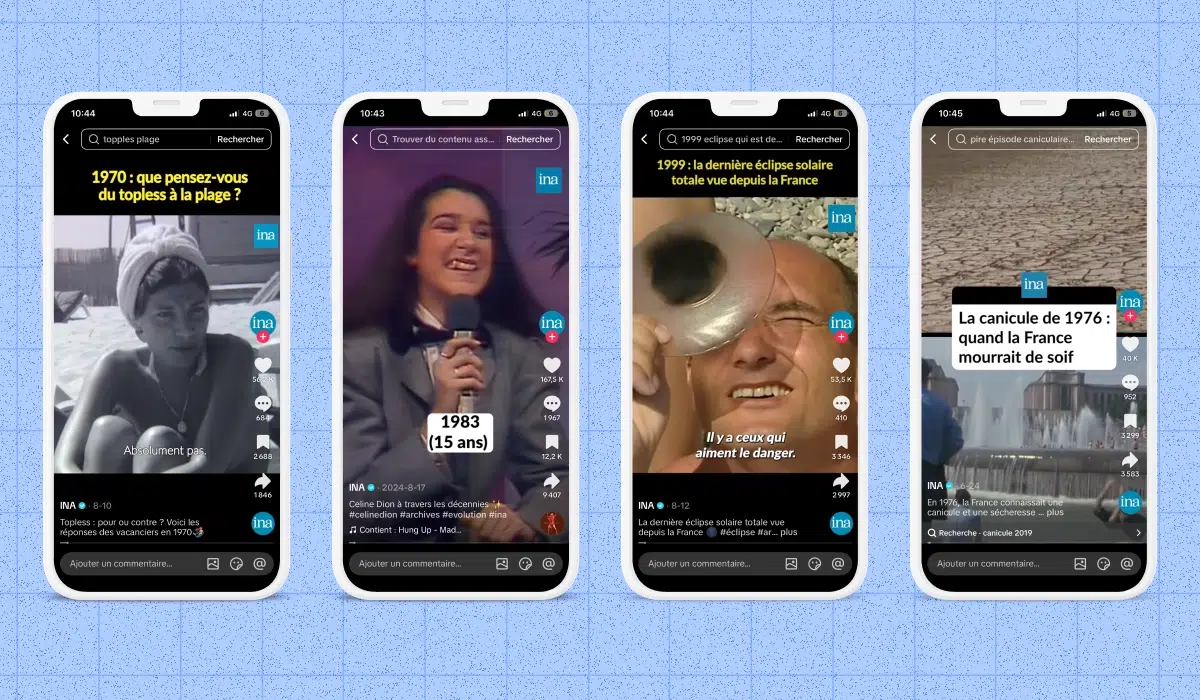
However, reenactment isn’t the only way to make its content feel fresh. By creatively repurposing its archives, the INA has managed to build a community of nearly one million followers on TikTok, with some videos racking up over a million views. For example, the INA capitalized on a viral trend on the platform: showing how things have changed over time through photos or videos, always with the same song playing in the background. As a result, a video dedicated to Céline Dion—featuring clips of the singer from television appearances with Madonna’s “Hung Up” playing in the background—has surpassed 13 million views.
1.d Boosting Subscriptions: Faced with declining search traffic and slower subscription growth, several media outlets have included video in their subscription offerings—or even made it a separate subscription. The videos are available on the media outlets’ apps and accessible only to subscribers. In 2026, The Wall Street Journal changed its strategy: whereas it had previously relied on distributing videos on free platforms like YouTube, the publication shifted its focus to subscriptions. Its revenue streams are no longer the platforms but the subscriptions themselves. “We produce journalism that’s worth paying for, and our video is no exception. Video must therefore truly increase the value of a WSJ subscription and convert the audiences most likely to subscribe into actual subscribers. We must therefore produce video that is also worth paying for,” explained Taneth Evans, the American newspaper’s digital director, to Digiday.
The Good Idea
This year, The Economist launched a trial offering, “The Economist Play,” a discounted subscription (compared to a full subscription) aimed at younger audiences. It provides access to the publication’s videos, podcasts, newsletters, and games, but not to its website. This new offer follows the October 2025 launch of Insider, their video platform dedicated to long-form content and also reserved for subscribers. Thus, high-value-added long-form content is not available for free on YouTube but is behind a paywall.
2. Where to start?
Video can serve several purposes: it’s important to identify your goals and prioritize them. Before embarking on this digital journey, you should also make sure you have the resources to do so and are committed to it for the long term. Making a video isn’t just about having a good idea—you then have to shoot it, edit it, and distribute it. This work requires people with the necessary skills and the time to create well-thought-out formats that align with your overall strategy.
2.a What you want to convey: Your social media account serves as a showcase, just like your website’s homepage or the table of contents of your magazine. Make sure this overview reflects who you are and what you do; otherwise, you risk failing to attract users who are actually interested in your topics and themes. Faced with a seemingly endless array of possibilities, it can sometimes be difficult to know what you want to produce: live-action videos, montages with voice-overs, illustrations? To start, you need to identify the content that already makes up your editorial offering and the pieces that seem most suitable for adaptation into video and/or aligned with social media conventions. This is the simplest approach, but you can also be more ambitious and directly conceive a video editorial product that you build from scratch—such as a series of reports that will have no written transcript.
The Good Idea
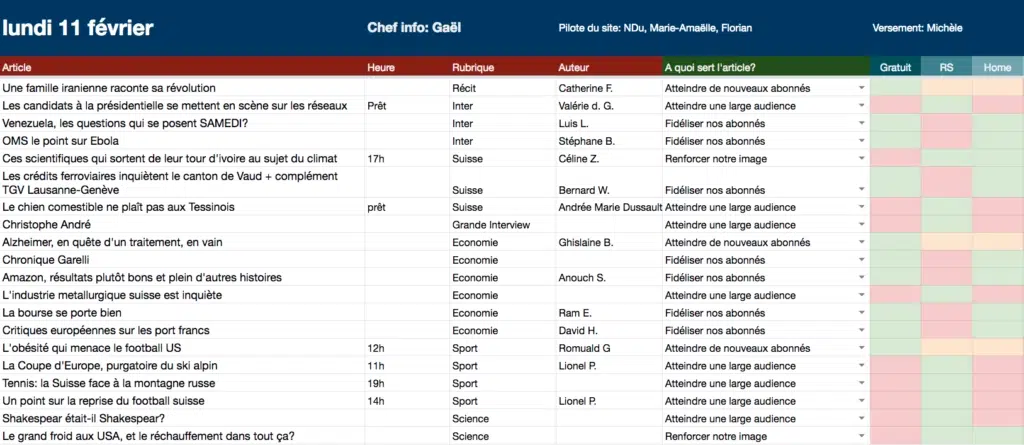
During its daily editorial meeting, *Le Temps* asks a simple question about each article on the day’s agenda: What purpose does it serve? This question applies to every editorial piece produced. The editorial team has established a list of four objectives, each corresponding to a different target audience and determining distribution: strengthening Le Temps’s image (free), retaining subscribers (paid), reaching a broad audience (free), and attracting new subscribers (paid). For each of these objectives, KPIs have been identified to measure whether the objective has been met. This is a question to ask when launching a video strategy for each planned piece of content.
2.b Resources and Business Model: Producing videos may involve purchasing equipment, expanding your team, or providing in-house training. This can vary greatly depending on the chosen format, so it’s helpful to estimate the resources needed for each production and then weigh them against your objectives. This investment implicitly raises another question: that of monetization and the media outlet’s business model. An ambitious strategy can be justified if it generates revenue, whether through content reserved for paying subscribers, partnerships, or revenue from the platforms themselves. Thinking about resources and considering monetization thus go hand in hand, as the latter often helps offset—or even justify—the former.
2.c Prioritize: Once you’ve laid out your ideas, it’s important to consider which formats are most essential for you and the goals you want to achieve. For example, posting videos with cultural recommendations can be an interesting format, but if your editorial line is based on reporting, users won’t identify with you that way. This is also a good time to translate the resources identified earlier into a realistic posting schedule and formats. These are the elements that should help you prioritize and strike a good balance between videos that are easy to produce, resonate with your target audience, and accurately reflect your editorial line, and other, more time-consuming projects that bring something new to your media outlet.
2.d Create a posting schedule: While there is no set “schedule” for social media, consistency and creating a posting schedule are essential. You don’t need to post every day on every platform you want to use, but you do need to know what formats you want to post and how often. Especially since the formats differ: on YouTube, long-form content is preferred, whereas on Instagram, videos longer than 3 minutes aren’t favored by the algorithm. The production times for these two formats differ. It is therefore essential to understand the time required for each format in order to develop a coherent strategy that aligns with both your needs and your resources.
2.e Building a Team: Once you’ve identified the skills you need, you have two options: tap into internal expertise or hire externally. Some newsrooms choose to hire journalists who specialize in video. That’s what L’Équipe did in 2024 with journalist Paul Bonnaud to develop its video strategy on social media, particularly through personification. Until then, the videos had been produced by community managers.
Hiring from outside the organization is sometimes the easiest option, but also the most expensive. In-house training is another solution. Many newsrooms have decided to train their journalists so that they can handle every stage of video production: planning, writing, and distribution.
In March 2026, The New York Times hired a video training editor to train its reporters and editors. The Wall Street Journal set up a Talent Lab team to train journalists in-house to bring their content to life. This can be achieved through video, podcasts, or newsletters, depending on each person’s skills. As a result, approximately 200 journalists have been trained. To integrate video into its editorial offerings, the WSJ adopted a cross-functional approach that includes editors-in-chief, photojournalists, product managers, and audience managers.
In many cases, the video production team is not separate from the rest of the newsroom and other teams—quite the opposite. Audience, marketing, and product teams work alongside video journalists to develop the overall strategy. In some cases, the marketing team merges with them to take a cross-functional approach to formats, covering both editorial and marketing aspects.
The Good Idea
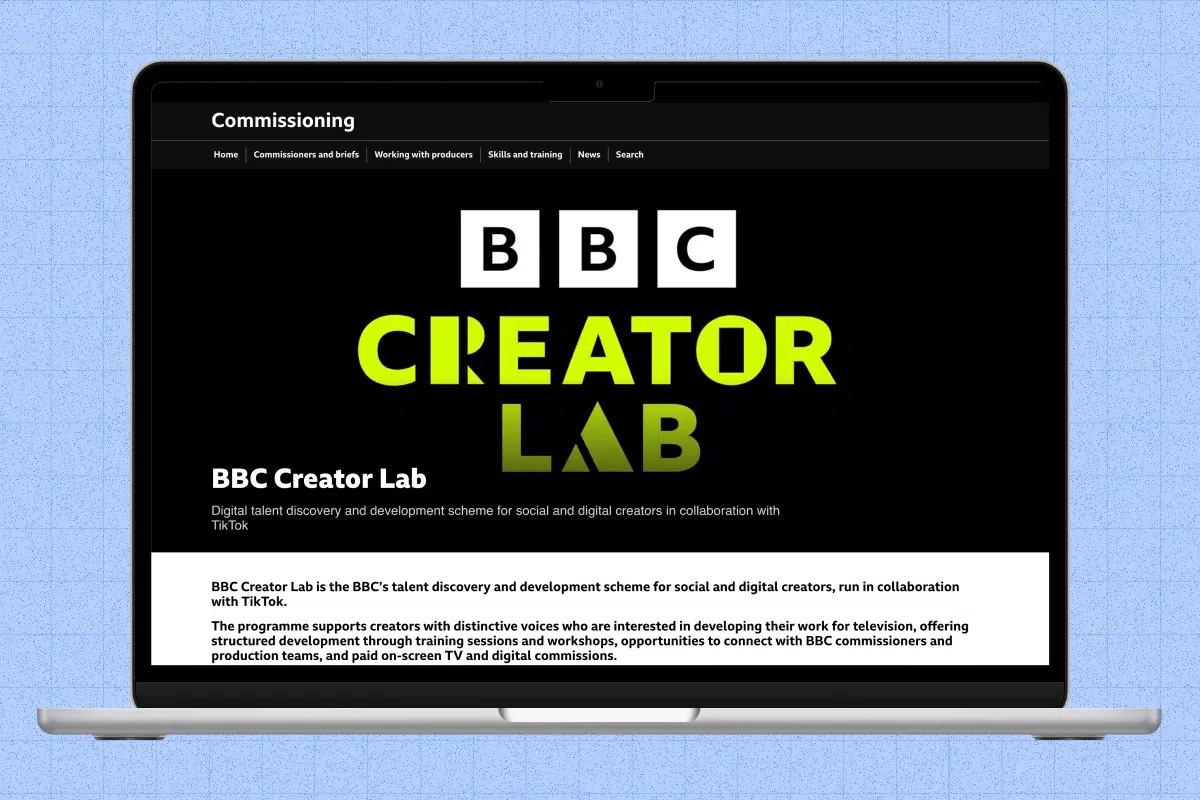
In 2023, the BBC launched its Creator Lab in the United Kingdom: a training program, in partnership with TikTok, aimed at content creators on the platform who wish to develop their skills to work in the broadcasting industry. More than 90 participants took part in the program and went on to join various teams at the BBC. Since then, the network has expanded the initiative with a program dedicated to sports and another, coming soon, focused on gardening and horticulture. This is a great way to tap into the expertise of these creators and train them in-house on the ins and outs of the audiovisual industry and the network itself.
3. What's next?
3.a Experiment: When it comes to social media, there’s no magic formula for determining whether content will perform well or not. In fact, what constitutes “performance” varies depending on the goal: do we want to engage our community, or raise awareness of a survey we’ve just published? Platforms have their own rules and algorithms, which are largely opaque, but we can never be certain before posting what will actually work: sometimes it flops, and sometimes there are pleasant surprises. Don’t hesitate to experiment, invent new formats, and explore fresh ways of storytelling. The most important thing is to engage with your community and see how they respond!
On social media, testing different formats isn’t something you can do in just a few days. If you post new content and it gets few comments or views, that doesn’t mean it won’t work. You need to keep testing it over several weeks—about two months—and then look at all the statistics to decide what needs to be adjusted.
3.b Measuring Your Impact: On social media, users do not form a homogeneous group. Each community is different, depending on age or interests. Their needs, digital habits, and points of reference are unique, and you’ll only understand your own community by surveying it. Social media is a great way to communicate with your audience through the comments section as well as private chat channels. Having such direct access to feedback from your community is a great way to find out not only whether they like your work but also what concrete benefits it has brought them.
4. Limitations
4.a Platform Moderation: This special connection with your community through social media is very valuable, but it can be cut off overnight, subject to the platforms’ moderation policies. Accounts can be banned or certain posts taken down at the social network’s discretion. Sometimes, you may simply lose visibility overnight without receiving any explanation or notification. As a result, your community—even if it follows and supports you—will no longer see your posts.
Another risk is having your account deleted and, as a result, losing your content. It is difficult to appeal these decisions, especially when you do not have a direct point of contact to whom you can explain your situation.
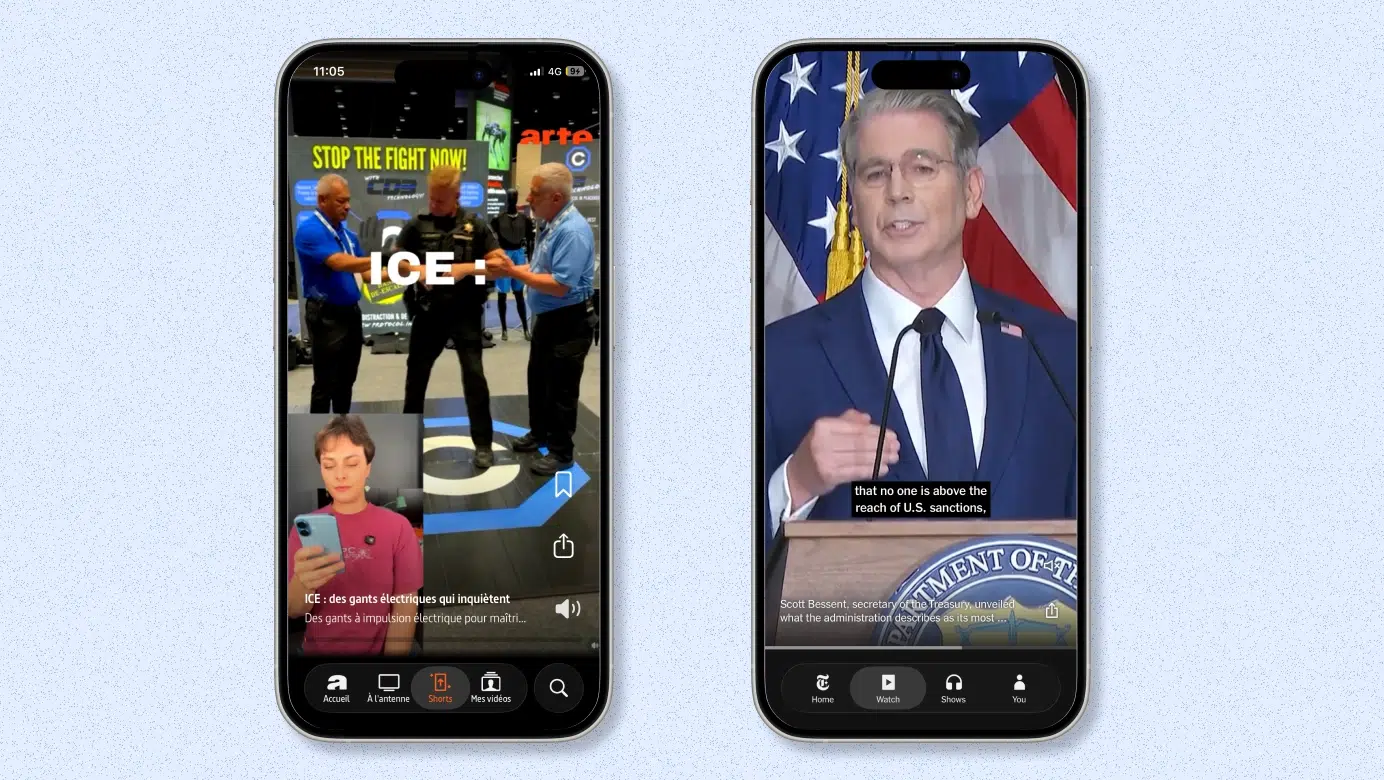
4.b Protecting Content: To maintain editorial and technological independence, finding a way to protect content has become essential. Many media outlets publish their “social media” videos on their apps. This is the case with The New York Times, for example, which has added a “Watch” tab to its app that functions as a video feed. For the past two years, arte.tv has incorporated a similar tool into its app that allows users to be redirected to the original content on its own streaming platform. This is a good way to drive traffic to its own app without neglecting other video platforms such as YouTube or Instagram.