


For the first time in 2026, social networks and video streaming platforms are the most common way to access news online worldwide, ahead of television and media websites and apps, according to the latest Digital News Report. Although traditional media have invested in these platforms, content creators who produce news capture audiences there—often young people disillusioned with traditional media. Each week, 27% of respondents get their news from creators specializing in information. This figure rises to 46% if we include generalist creators who sometimes discuss current events. However, only 3% say they get news exclusively from creators. Moreover, those who follow them generally consume more traditional media than the average. Content creators thus appear more as a complement than a substitute.
You are reading the sixth episode of our monthly case study series on independent European media: technological independence, business models, content diversification… with our tips for taking action. A series produced as part of our Sphera network for media leaders and creators in Europe.
Don't want to miss the next one? Subscribe to our newsletter.
Through video, the flagship format of social platforms, figures have managed to embody and present topics while building a strong connection with their audience. Comment sections or live chats on platforms like Twitch allow them to truly understand their audiences and even survey them: on what they thought of the latest topic or what their next video should cover. The relationship of trust is strengthened. According to the latest Digital News Report, the public generally considers creators more entertaining and easier to understand than traditional media. In France, 18-24 year-olds also judge them as more authentic.
However, they are considered less reliable and less impartial than traditional media. This gap is beginning to narrow. A recent study conducted by Proof News, a nonprofit newsroom, concluded that citing sources increases public trust, especially when they appear in the video description.
Faced with the enormous success of certain content creators, like HugoDécrypte in France, who has over 20 million subscribers across all platforms, newsrooms have followed suit: first the video trend, then the trend of embodied personalities. In its predictions for 2026, the Reuters Institute indicated that 76% of media leaders surveyed wanted their journalists to behave more like content creators this year. Half planned to partner with creators to help distribute their content. Nearly a third wanted to hire them, particularly to manage their social media. Finally, 28% announced plans to launch a studio or joint venture dedicated to creators to facilitate partnerships. All of these initiatives show the diversity of possibilities when collaborating with content creators.
Table of contents
Is this relevant to me?
While some publishers may see content creators as a threat, traditional media can learn from them and draw inspiration from their approach. Their way of telling stories, the formats they invent, and their engagement with audiences are all interesting methods to observe and adopt. Content creators are not a threat but a complement to the current news landscape. Their success and practices can only inform traditional media's thinking and encourage them to rethink their approach.
1.a Expanding your audience (and often making it younger)
More than half of 18-24 year-olds cite social networks, video platforms, or AI chatbots as their main source of information. This demographic particularly favors embodied formats, presented by people they resemble or feel close to. In France, HugoDécrypte reaches 28% of those under 35, a figure that has been growing in recent years. Giving content creators a space or format on your media allows you to tap into their reputation and reach their audience.
The bright idea 💡
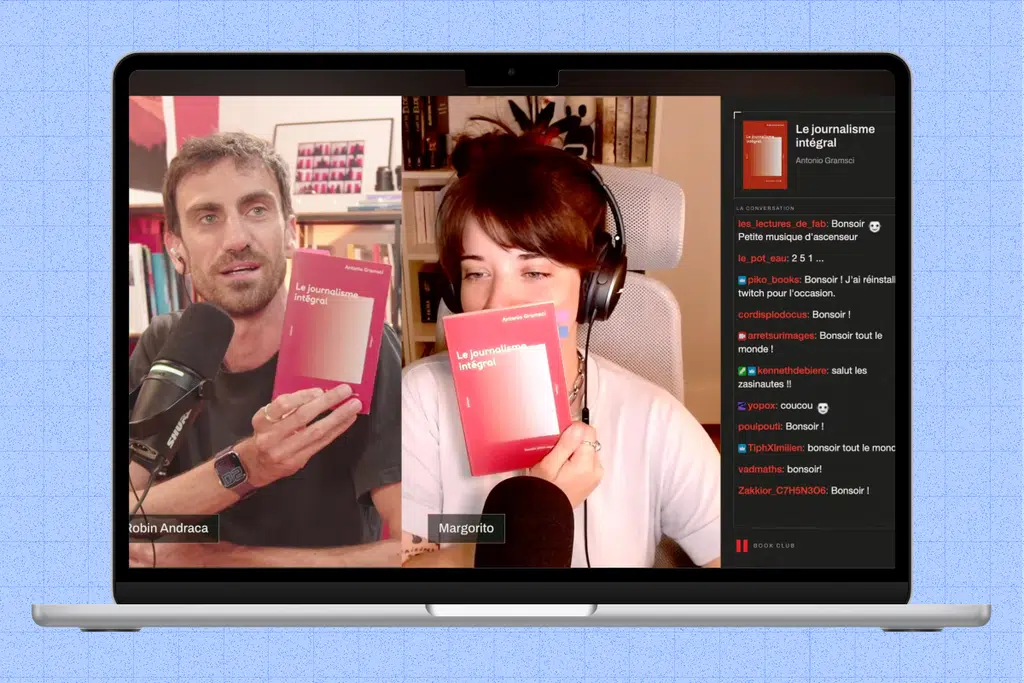
Last summer, Arrêt sur images launched its book club. Every quarter for one year as a trial, a book chosen by the public from three suggestions by the newsroom is discussed live on the media's YouTube and Twitch channels. While this format is already intended to diversify and retain its audience, it does so even more by entrusting its hosting to literary video creator Margorito, accompanied by a journalist from the newsroom.
1.b Retaining your audience
By engaging content creators, you necessarily have to invest in their platforms and adopt their conventions. In doing so, a stronger connection—or sometimes an entirely new one—is forged with the audience, who can interact directly with the media. But you need to know how to do it right. Hosting a Twitch livestream, for example, is different from presenting a television show: you need to find the right pace and keep an eye on the chat. Entrusting this type of format to a content creator for whom it's their profession proves very useful.
Since late 2022, Mediapart has had its own Twitch channel with the show "Subscribe". In 2024, a second show dedicated to news joins it, "Subscribe Morning" hosted by Ostpolitik, a recognized journalistic figure with a strong online presence for the past ten years. For television, this platform is particularly interesting because it enables a connection with viewers that television makes impossible.
The bright idea 💡
In January 2021, journalist Samuel Étienne presented the first Twitch live stream for the news division of France Télévisions to answer viewers' questions about vaccines. The previous year, he had launched his own channel on the platform with his own daily news review format, « La Matinée est tienne », alongside his work at franceinfo. Since then, the franceinfo channel on Twitch has been abandoned in favor of the France tv Slash channel, dedicated to pop culture and gaming.
1.c Acquire skills that you lack in your writing
communities, they are far from representing all working journalists. Traditionally, putting yourself in the spotlight runs counter to journalism, which champions objectivity. While recent years have allowed us to take a step back from this notion, speaking in the first person makes some journalists worry about shining the light on themselves rather than on the facts and the work they're trying to communicate. Bringing in people whose job is to embody themselves on social networks, and who know these codes and constraints, can only be beneficial for newsrooms.
The bright idea 💡
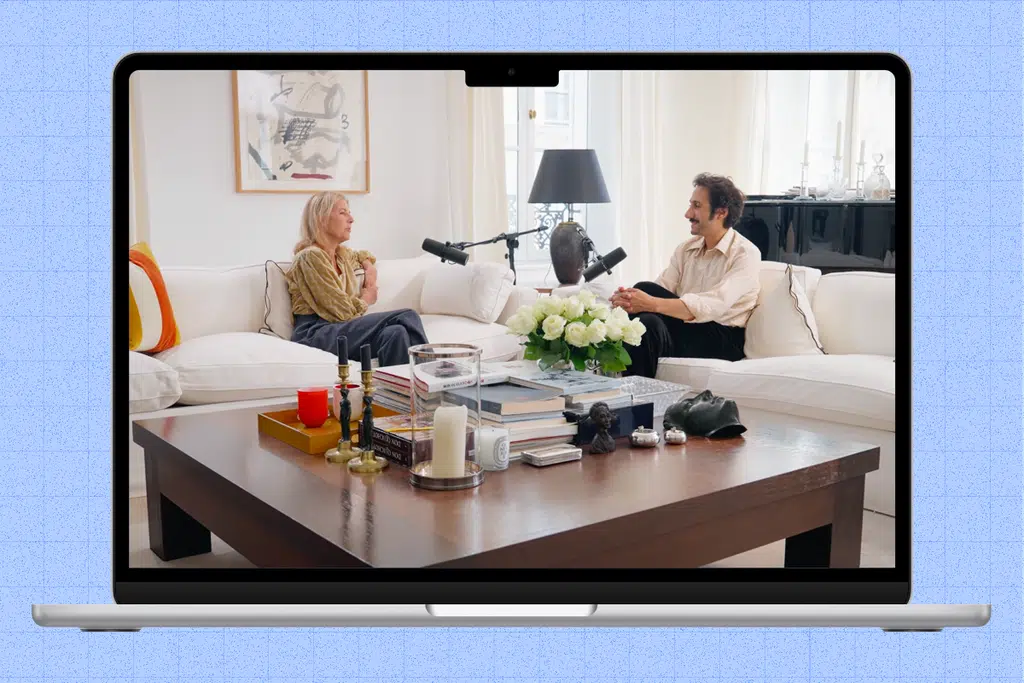
YouTuber Gaspard G, who has been creating news content for over ten years, advises Claire Chazal, who launched her YouTube channel in 2024. Each month, she invites a cultural figure and interviews them. Gaspard G and his team handle production and editorial and digital support through Intello, his creator agency.
1.d Make your content more accessible
We've already said this above: journalists don't necessarily enjoy performing a character. Yet embodying a character allows information to be conveyed differently. On social media in particular, you can afford to be funny and adopt a tone that wouldn't have been tolerated in writing. Some media outlets specifically seek creators who can embody a tone that's slightly off-beat, one they're not necessarily comfortable with themselves.
Personification can also enable a more educational tone. France Télévisions, for example, entrusted a documentary series « They Are Called… » in June 2026 to history content creator Benjamin Brillaud, known by the pseudonym Nota Bene. He devotes each episode to a historical figure or icon, such as samurai. In 50 minutes, he tells their story from their emergence to the present day, by appearing on screen and interviewing experts.
The bright idea 💡
Content creator Gaëtan Gabriele has been making several videos a month on Vert's social media channels for several years. Every week, he publishes "This Week's Good News", videos in which he dances, often out in nature, to positive news stories.
Where to start?
There are several ways to work with content creators, depending on their specificities as well as the resources and ambitions of your editorial team in relation to your overall strategy.
2.a Review the content in-house
Journalists in a newsroom are not inherently content creators, but some may be close to that ecosystem. By surveying its newsroom, a media outlet can uncover multiple talents and enable some of its journalists to acquire additional skills and propose new ways of storytelling.
2.b Recruit journalists with these skills
In recent years, an increasing number of job offers for "social media journalists" have been popping up on employment platforms. Their descriptions call for skills in editing and filming, but also often… for embodiment and presence. In journalism schools, moreover, more and more modules dedicated to this way of storytelling and self-filming are being created, which is inspiring vocations among some students.
2.c Collaborate with established content creators
News organizations, large and small, are increasingly calling on creators to take charge of a format or even a program. ARTE is following this path by entrusting creators with formats on YouTube, such as « En Quête », a decryption format hosted by Charlotte Vautier (OK Charlotte) since this summer.
For some editorial teams, a lighter collaboration remains the most relevant: creators produce embodied content for them that they distribute on their own networks. It's less expensive but very effective, especially when the creator appears in the video: their audience is then directly exposed to the media. This is the choice Le Cri recently made, by inviting Damien Fabre (Religare), a content creator who simplifies the history of religions, to produce an article and video each month for the outlet. His videos already generate significant engagement with over 2,000 likes and 160 comments on the latest one posted on Instagram.
The bright idea 💡
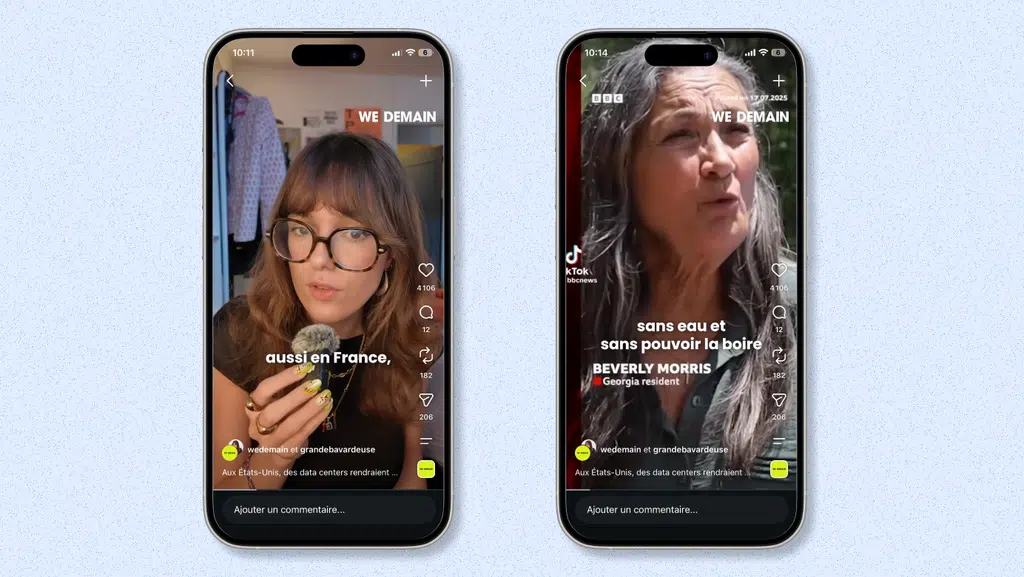
In 2026, content creator "Grande bavardeuse" collaborated several times with the media outlet We Demain. In several videos posted on Instagram in collaboration with the media, she breaks down current events, often covering topics that resonate on social networks. For example, in October, she created a short video about the impact of data centers on drinking water in the United States.
2.d Create incubators or accelerators
Just as there are media and start-up incubators, some newsrooms are focusing on supporting creators through acceleration programs. Their goal is to help them benefit from their expertise and audiences, and to create spaces for mutual aid. German group Axel Springer launched Axel Springer Creators in October 2026, a platform for journalists and emerging talent. The group provides production, technology, marketing and distribution across its media to allow participants to create their own formats. In return, the revenue generated is shared.
The bright idea 💡
In 2026, the regional daily newspaper Ouest-France launched an acceleration program dedicated to news content creators, OFF7 Creator. For eight months, they are supported by the media, which gives them access to its editorial, legal and technical resources. The resources and training are free, and the ten winners of the first cohort were unveiled in October.
2.e Leaving a newsroom to strike out
What if we flipped the situation and looked at journalists who want to become content creators? Several media outlets have been created in recent years because some journalists wanted to experiment with other formats, closer to content creation, and didn't have the space to do so in their newsrooms. They left their jobs either to strike out on their own and focus on their social networks, or to create full-fledged media outlets centered on video and social media.
The bright idea 💡
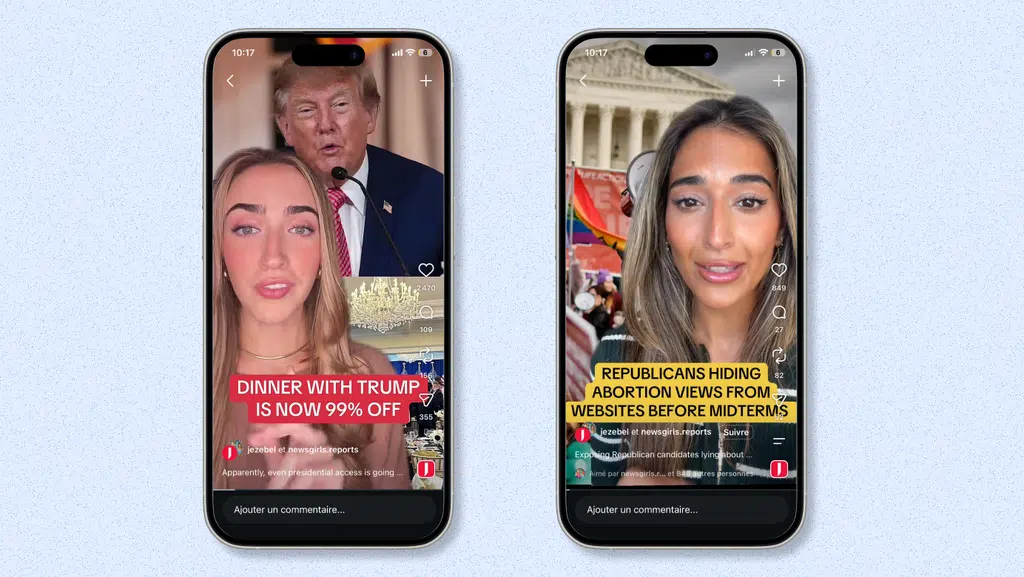
Two American journalists, Wren Woodson and Mabel Kabani, who worked for CBS's "60 Minutes," left the newsroom to create their own media outlet: Newsgirls. By publishing podcasts and videos on YouTube, TikTok and Instagram, as well as on Substack, they present themselves as "news creators". Drawing on their experience at "60 Minutes," they cover political, geopolitical and media news, but with a more accessible tone. They initially wanted to pitch this idea to traditional media outlets, without success.
What next?
Encouraging creation and supporting content creators
Content creators are often isolated and rarely supported. Yet exchanging ideas and training with newsrooms, through partnerships or training programs, is essential for them to strengthen their independence and editorial skills. This type of initiative must allow both parties to enrich each other mutually to work. In September 2025, FT Strategies, the Financial Times' consulting firm, published a six-month study on news creators with the support of WAN-IFRA. It comes with co-developed "guidelines" designed to help them produce accurate, reliable and useful information.
The bright idea 💡
As part of Sphera, the network of independent European media outlets we coordinate, we launched a call for projects in 2026 aimed at independent media and content creators. This program, Media Collabs, allows three content creators to be mentored by an editorial team from the network, while also taking masterclasses to develop their skills.
Points to watch
4.a Too unclear a collaboration framework
Content creators also have concerns when it comes to collaborating with newsrooms. They fear that media outlets will "outsource" audience engagement to them and use them only as a distribution channel, as explained by Nieman Lab in its predictions for 2026. Collaborations must be two-way, and content creators must be integrated into the project from ideation to distribution, not just when it comes to sharing a link. It's also important to be clear about the contractual framework: who creates the content, who retains the rights to it, and so on.
4.b If a creator leaves, so does their audience
When journalists within a newsroom take on an increasingly significant role in the outlet's reputation, the risk is that they leave and their subscribers follow. Dave Jorgenson, a video journalist for the Washington Post's TikTok and YouTube accounts, left in July 2025 after eight years at the outlet. According to an analysis by Matt Karolian cited by Press Gazette, views on the Post Universe YouTube channel dropped 85% in five months, from 54 million in April 2025 to 8.2 million in September. Part of the audience was redirected to the company the journalist had just created, Local News International, according to data from Rival IQ noted by the Reuters Institute. Nevertheless, having a strong media brand from the start and having multiple iconic figures help mitigate this risk.
4.c Blurring boundaries between content creators and journalists
As more and more content creators are producing news content while respecting journalistic ethical rules, and journalists are striking out on their own on social media, the boundaries between the two are becoming blurred. The risk is that users will no longer be able to distinguish between creators who produce verified, sourced information and those whose content is more opinion-based.
Conversely, by trying too hard to give content creators ethical guidelines and guide them toward more journalistic production, we risk undermining their freedom, which is what makes them successful and gives them their identity. The risk is that content creation will become uniform and lose originality as it seeks to get closer to traditional media. Thus, support and training must not come at the expense of their creativity. Testing formats together and learning to communicate, by understanding each other's visions, should enable co-creation and exchange.

Written by Agathe Kupfer
Agathe is the impact manager for Médianes and its network of independent European media outlets, Sphera. She ensures that productions have a strong impact, with both an editorial and marketing eye. Agathe is a member of Médianes' steering committee.

Written by Margot Darcy
Margot is the project manager for support and training initiatives for the media outlets the studio works with.