To keep your media platform active on Facebook and Instagram, you need to understand these tools in order to increase visibility or monetize your content. Faced with the uncertainty created by algorithms, someespeak of “censorship” of posts or a “loss of editorial independence.” Médianes, Revue Far Ouest, Clit Révolution, Gaze, and Loopsider all highlight their presence on social media.
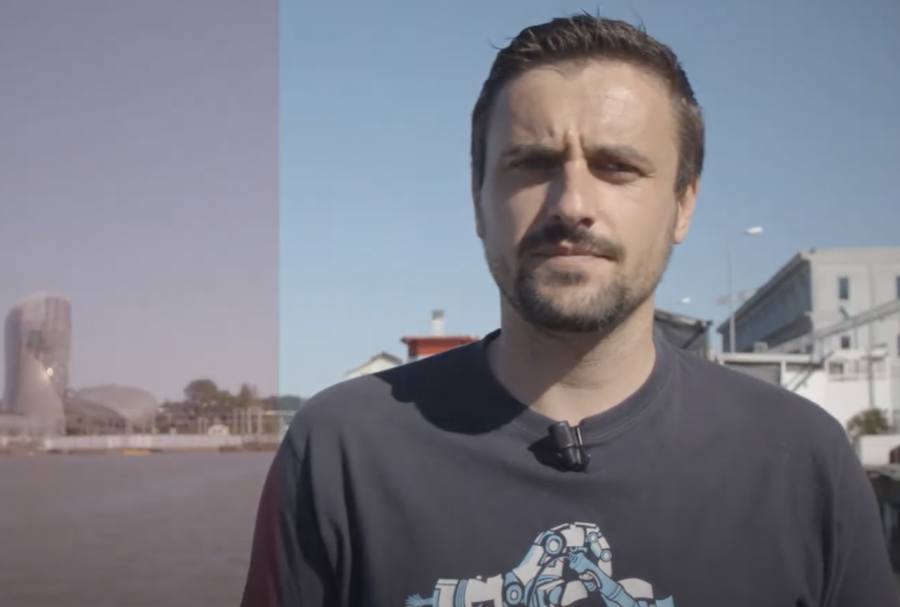
“Facebook was like my drug dealer,” asserts Flo Laval, co-founder of Revue Far Ouest, an independent media outlet covering the Nouvelle-Aquitaine region. He weaves this drug metaphor throughout our conversation. When a new media outlet launches, a social-media presence is almost inevitable. And for the team behind the magazine, which launched in 2017, it was necessary to learn how to navigate these platforms.
Between 2016 and 2019, it was pure ecstasy: the media outlet, which also had a video presence on Facebook, had just created its page with the goal of gaining visibility. “We managed to triple our community over the course of several months. We could clearly see that no one was visiting the website. So we gained traction thanks to that as well,” Flo admits. To gain traction on the social network, the magazine followed the platform’s recommendations: “We had to post video content that was about 5 minutes long. “We covered topics like the Yellow Vests movement, feminism, and the environment—topics that appeal to Facebook’s algorithms, so that generated engagement.” The video featuring Cyril Dion has racked up 180,000 views, and others have reached 675,000 views.
To the point of losing sight of the editorial line
But Flo quickly realizes that Facebook “demands that we produce more and more. Then it shows us how to pay even more to gain greater visibility.” And from one day to the next, everything comes to a halt. The platform demands shorter videos. Far Ouest loses its audience just as Facebook has become its main channel of communication. The team realized that it had become too tied to a single format, to the point of straying from its original editorial line: taking the time to meet people involved in environmental issues and tell the story of the Nouvelle-Aquitaine region. “We were producing content to please the algorithm; personally, I was dependent on something I no longer had control over.”
And that thing is the algorithm. “These days, the shorter it is, the better it works. Except that the magazine really gets to the heart of the matter. So with the algorithms, it just wasn’t working anymore.” In fact, in 2018, Facebook changed its algorithm, which had a particularly significant impact on the media. Also, at that time, Facebook was betting everything on video and recommending specific durations to gain visibility: between 1 and 5 minutes. Furthermore, Facebook launched a tool in 2014: Facebook for Media. A website designed for media outlets, conceived as a toolkit or guide to best practices for gaining visibility on the platform. “Facebook’s calls for more video content, however, are also accompanied by advice that can influence the content of those videos,” says researcher Tristan Mattelart in his article “Understanding Facebook’s Strategy Toward News Media.”
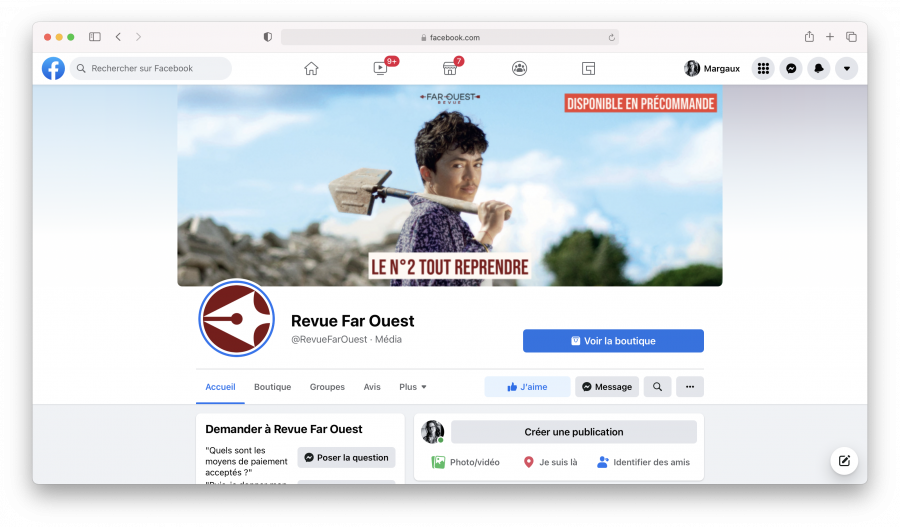
As a fledgling media outlet, the team at Revue Far Ouest experimented with its social media presence on a trial-and-error basis. “You have to stay humble when you’re just starting out: you try, you make a mistake, you adjust. There’s a gap between the right way to do things and the resources we have available to work with.”
"Censorship Is Becoming Political"
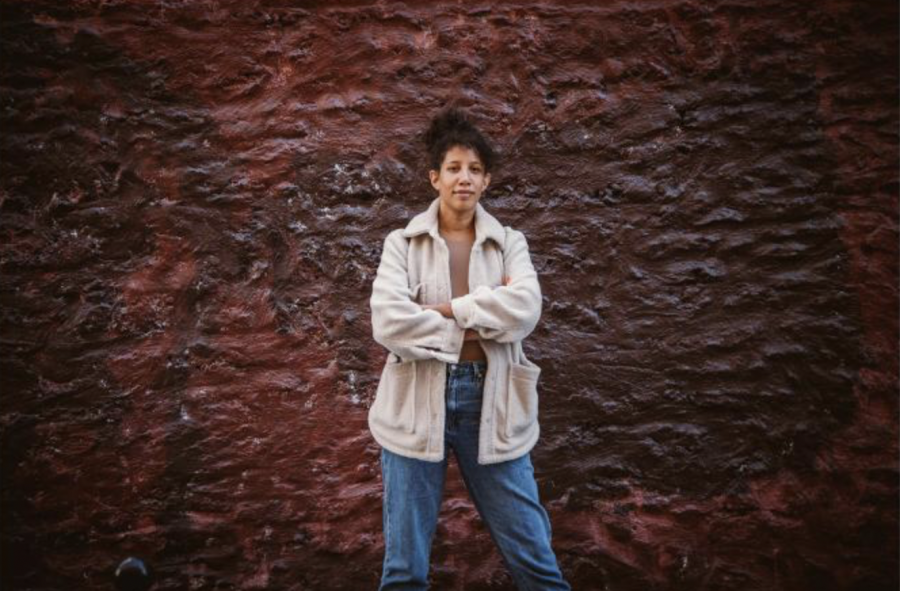
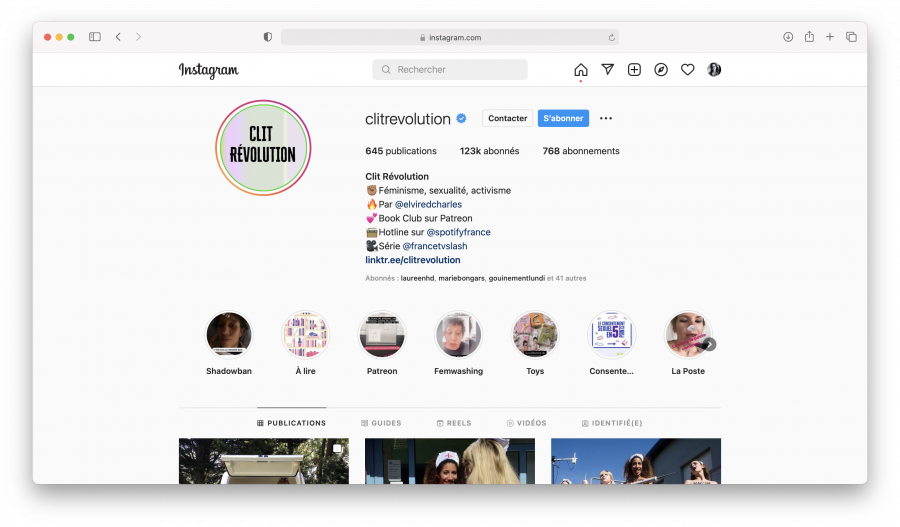
No longer able to understand how her main work tool works, Elvire Duvelle-Charles is experiencing this firsthand with Instagram through her account Clit Révolution. Her book *Feminism and Social Media: A Story of Love and Hate* was published by Hors d’atteinte in February 2022. The day before our conversation, she was at a bookstore meeting her readers: “It was a breath of fresh air to meet my community offline.” That speaks volumes about the shift she’s currently making regarding social media. During our meetings, “the issue of ‘shadow bans’ and censorship of feminist content often comes up. “My community is starting to become aware of these issues.” A shadow ban is when an account is made invisible in the feeds of those who follow us. “When you’re made invisible by the algorithms, you’re shown less frequently, without knowing why. Censorship is rarer, but more explicit.” But then why would feminist accounts be made invisible? “My theory—and this is just my personal opinion,” continues Elvire Duvelle-Charles, “is that our accounts are being reported en masse: those who can’t stand feminists are making sure we’re regularly restricted.”
The ambivalence lies in the fact that cyberbullying is “good for the algorithm ” since a post’s value is calculated based on the engagement rate that content generates. Thus, a feminist post on social media that is targeted by a barrage of hateful comments could “appeal” to the platform’s algorithm. Unfortunately, the culture of confrontation causes such contents to be promoted. While activism today is also expressed through clicks, feminist accounts have existed for several years, and Meta (the parent company of Facebook, Instagram, and WhatsApp) tends to favor novelty. After five years online, visibility drops drastically—"sometimes we get 78 likes from 120,000 followers. The account is no longer promoted the way a new one is.”
According to Elvire Duvelle-Charles, Meta does not disclose its practices for blocking certain content: “You find out about them when you post.” She cites as an example the cover of *Télérama* featuring activist and model Leslie Barbara Butch posing nude. Sharing the photo was blocked on social media for several hours. For its part, Instagram shares its tips for gaining visibility: posting regularly, producing multiple pieces of content per day, and posting Reels is also recommended. Meta wants to catch up with TikTok’s immediacy, but for Elvire, it’s mostly about “producing more and more, and that’s exhausting.” Keeping up with the pace becomes unmanageable, and there’s a risk of losing your editorial focus. Even as some follow these recommendations, their content is blocked—censorship is becoming political.”
Go through the legal system
Her perspective on social media has changed. “I have a mixed relationship with social media. On the one hand, I feel repulsed by it, and on the other, I keep using it.” Ten years ago, Elvire was in charge of social media for the Femen collective. “We had a better understanding of how the algorithms worked: the audience’s engagement rate in the hours following a post. We were blocked for a while because we were posting photos showing nipples, but then the posts would come back. “Now, it’s algorithmic censorship.”
To denounce these abuses, Elvire Duvelle-Charles, along with other feminist accounts, co-signed an op-ed published in Mediapart. In this piece, they denounce “the increasing censorship of activist groups on social media and the total lack of moderation of sexist, racist content, and content that incites cyberbullying, as well as the constant silencing of our voices ” and call, in particular, for “a modification of the algorithm to ensure better representation and visibility of minority bodies and the creation ofan independent social media observatory, co-funded by the government and the platforms.”
It all started with the suppression of a publication by the feminist and anti-racist activist Mélusine, who asked the question: “How do we get men to stop raping?” Elvire Duvelle-Charles explains that this was also the starting point for a summary injunction filed against Facebook by a collective of 14 feminist accounts, including Clit Révolution. The group has retained attorneys Valentine Rebérioux and Louise Bouchain. The goal of this lawsuit is to secure an immediate solution. They are calling on Facebook to be more transparent regarding its algorithms and moderation policies.
___________________________________________________________________________

Nikos Smyrnaios is an associate professor of Information and Communication Sciences at the University of Toulouse and the author of *GAFAM vs. the Internet*, A Political Economy of the Digital Age (INA, 2020).
The word “censorship” comes up several times in the testimonies that were collected—do you think this term is appropriate?
To me, the word “censorship” has political and military connotations. I would rather talk about reduced visibility, suspended posts, or posts being hidden. When Facebook removes posts, it cites a whole range of reasons, but this may be due to a violation of the terms of service. When a media outlet posts content, it agrees to all the conditions set by the platform, so it must comply with the rules imposed. But there’s also the issue of moderation. This task is partially carried out by subcontractors abroad. The cultural and political context of the moderators differs when it comes to moderation. Thus, Facebook cites the reason for the error after the fact, and the blame falls on the subcontractors. It’s a convenient way for Facebook to avoid having to justify itself.
Can legal actions—such as the 2021 summary judgment lawsuit filed against Facebook by 14 feminist accounts—bring about change?
I’m skeptical. It’s a good step for media outlets to take these actions, but I’m not sure they’ll be successful. Instead, we should focus on a political solution like the Digital Services Act proposed by the European Union. In particular, platforms will have to make their algorithms public. Access to these solutions is asymmetrical: it has become clear that related rights and the agreements reached between publishers and platforms have exclusively benefited the major traditional media outlets. Facebook News will highlight these media outlets, and the concentration of power will become even greater. Emerging media outlets are forced to comply with these rules and must rely on alternative solutions and their engaged community.
The Facebook Filesraises the question: Does Facebook still have control over its algorithms?
Facebook controls its algorithms. What it doesn't control are the indirect effects. For content moderation, keywords are specifically selected, even though human speech is complex and algorithms do not understand satire. We are seeing that the GAFAM [Google, Apple, Facebook, Amazon, and Microsoft] and TikTok are shaping how information is used. For exemple, Facebook changed its algorithm after the U.S. election. For its part, Google has long demonstrated that it calls the shots in Spain.
___________________________________________________________________________
"I can't see a thing."
Being visible on social media also helps secure a portion of one’s income. Gaze, an independent feminist magazine that celebrates the diversity of women’s perspectives, is a good example. To promote their media platform and publicize their print magazine, the team uses advertising (sponsorships) on Instagram and Facebook through the platform’s advertising tool: Business Manager. The problem: this account is currently blocked. “Right now, I have no insight into our social media presence since we’re literally blocked,” says Clarence Edgard-Rosa, the founder, “Our non-advertising posts are still being published, but we never know when we might be censored.” In short, it’s impossible to know what Meta’s algorithms will or won’t accept, and it’s impossible to sponsor their content or ensure sales of their magazine.
The restrictions are directly linked to the publication’s editorial line. In its third issue, Gaze had several of its posts banned on Facebook. The cover shows a woman wearing a flesh-colored dress, seen from behind, looking at herself in the mirror. “Facebook’s algorithms think we’re posting prohibited content. What angers me the most is being told that my magazine’s cover is pornographic. Even the person from Facebook’s marketing department whom we spoke with on the phone told us that ‘yes, objectively speaking, there’s nothing pornographic about it.’ We’d almost have to ask Meta for their approval to find out whether or not they’ll accept our next cover.”
A cynical tone that makes no secret of their frustration, even though that energy could be better devoted to running the magazine. Every time content is suppressed, the team wants to know the reasons: to try to understand the arguments, schedule phone calls with Meta, and appeal the blocks.
"Absurd situations"
Gaze en viendrait à contourner la « censure » par l’autocensure. « On est là-dedans. La création des posts se fait totalement en fonction des algorithmes et des possibilités d’être censurés. Dans tous les cas, nous n’avons aucune idée de quel type de contenu peut être bloqué. On garde notre liberté de ton et de contenu pour la revue ». En réponse, Facebook apporterait deux explications différentes : celle d’une erreur ou bien la plateforme reconnaît que ces publications n’ont rien de déplacé, mais il faut les supprimer, car cela ne coïncide pas avec les algorithmes.
For the magazine, the problem also becomes an economic one: “If we don’t communicate, it will have an impact on sales figures.” “Gaze is facing a whole host of penalties,” Clarence assures us: content that gets skipped, people who share it, posts losing visibility, and features disappearing. When launching its first issue, Gaze hosted a live stream on Instagram and Facebook. “It was during the first lockdown; we didn’t really have any other choices, but we wanted to put on a high-quality event. Two days before, we were doing some tests and discovered that access to the live feature had been disabled. Unfortunately, I have plenty of absurd situations and stories like this one up my sleeve.”

Editorial stance, economic repercussions—Clarence Edgard-Rosa also highlights the political issue. “It’s a matter of vision. I don’t even know how we reached 30,000 followers on Instagram with all these obstacles.” She understands that one can be restricted on a platform open to everyone, but “for example, we had to cut a portrait from our first issue—that amounts to self-censorship. This is a particular concern for the artists we frequently feature. Ultimately, censorship is part and parcel of our approach and our commitment.”
Facebook's Failure to Respond
Following these reports, we contacted Meta. We received this response via email: “Unfortunately, we currently have no spokesperson or information other than what has been published to share with you on this specific topic.” Edouard Braud, Meta’s head of media partnerships in France, declined to answer our questions without approval from senior management. The tech giant aims to understand the issues faced by these accounts that have had their content blocked. To this end, Meta has specifically reached out to NGOs that advocate for public causes. These organizations also publish content intended to raise public awareness about topics such as sexuality or drugs, similar to that of the media outlets mentioned above. However, this content, too, can be blocked by the algorithm. The issue always revolves around images or words that cannot be used. In 2020, out of concern or simply for political communication, Meta contacted these NGOs. The goal: to share best practices with them so they wouldn’t be blocked by Facebook and other platforms. According to a source who attended one of these video conference meetings, “it was a sort of training session on what could and could not be posted.” Since then, no concrete solution has been provided for the blocking of content aimed at raising public awareness. And that’s how entire awareness campaigns have been held back.”
Fatigue and Solutions
“I chose to be outspoken; I don’t want to be politically correct, so I’ve come to terms with losing my public profile,” Elvire Duvelle-Charles confides. For the past year, she has been active on the Patreon platform, where she shares behind-the-scenes glimpses of her move away from Instagram, bonus content, “but above all, there’s kindness and support. I have 200 subscribers. Now, I make it a point to meet my community in person, talk with them, and organize gatherings.” That said, she hasn’t neglected Instagram, where she continues to post informative content.
Like Elvire, other content creators and media professionals are growing weary of the fast pace and online abuse. Alternatives are increasingly emerging on Discord, Patreon, Telegram, or even through the creation of newsletters. “ It’s also a financial issue. When you’re doing paid partnerships on Instagram, you have to know how to adapt to this change through diversification.” And she’s doing just that through the documentary *Clit Révolution* on FranceTV Slash, the release of her book, and the podcast *Hot Line* produced by *Nouvelles Écoutes*. “We’re finding alternatives; now I want to use my platform to help others.”
For its part, Revue Far Ouest has decided to take a break from social media. “ “Right now, we’re thinking about a new strategy for our presence on these platforms, and that’s sparking some debate within the team,” says Flo Laval. For the time being, the publication is refocusing on its print edition and newsletter. Indeed, the magazine can count on its smaller but dedicated community, with whom the team can maintain a direct connection and receive feedback on its journalistic work.
Loopsider: Going Where the Audience Goes
However, not all media outlets are at odds with the platforms; some are even banking on them. This is the case with Loopsider, which, since its launch in 2018, has relied entirely on social media for its reach and now has 2 million followers on its Facebook page. Founded by Johan Hufnagel and four other partners, the media outlet aims to go where the audience goes, covering topics that resonate with young people. “Our model is based on social media and brand content,” explains Harold Grand, editor-in-chief at Loopsider.
The media outlet claims that there is no connection between the platform and its editorial line. “We’re trying to tell new stories in short, 3-minute videos, and on Facebook we can monetize videos of that length.” Building a media model on a platform also means building an audience based on Facebook’s algorithms. But then, how do you know if a video will work or not? “Once it’s posted, you don’t know if a video will work. For example, an on-camera testimony or the spectacular landing of an airplane were huge hits. Conversely, when you think a certain topic will resonate with an audience, that might not be the case, and sometimes you get surprises,” Harold Grand continues.
Loopsider, which also runs Period, launched a series a few weeks ago on education, crafts, and housing. These are topics that resonate with their audience, as “viewers are tuning in.” Unlike the previous accounts, Loopsider has experienced very few instances of their content being blocked. “It can happen, and in those cases we don’t understand why. We never include nudity or violent content, so there’s no reason for us to be blocked. For violent images, we blur what needs to be blurred and add a warning label.” Since there are no subscribers in the strict sense of the word, the media outlet has a dedicated team working on audience engagement. They’re responsible for analyzing video metrics frame by frame, second by second. “In any case, a media outlet that relies on social media is constantly evolving; we have to try new things. Right now, we’re testing out formats on TikTok.”
TikTok is becoming the new battleground for media outlets seeking to attract younger audiences; 7% of people under 35 use it to stay informed (according to the 2021 Digital News Report). But just like Meta, the social network is accused of blocking certain LGBTQ+ content or posts containing the #BlackLivesMatter hashtag. This is a vicious cycle of social media that socially conscious media outlets are fighting against.
Editor’s Note: Médianes, the studio, Médianes, has collaborated with Revue Far Ouest to organize the Festival Imprimé and is assisting them with their strategic positioning.
________________________________________________________________
Learn more:
- Understand Facebook’s practices regarding the media, also means examining the historical development of the platform and its role in global news. Researcher Tristan Mattelart explored this issue in his article: “Understanding Facebook’s Strategy Toward News Media,” On Journalism, About Journalism, Sobre periodismo [Online], Vol. 9, No. 1 — 2020
- Dominique Cardon, Digital Culture, Paris, Presses de Science-Po, 2019.