Customize the editorial
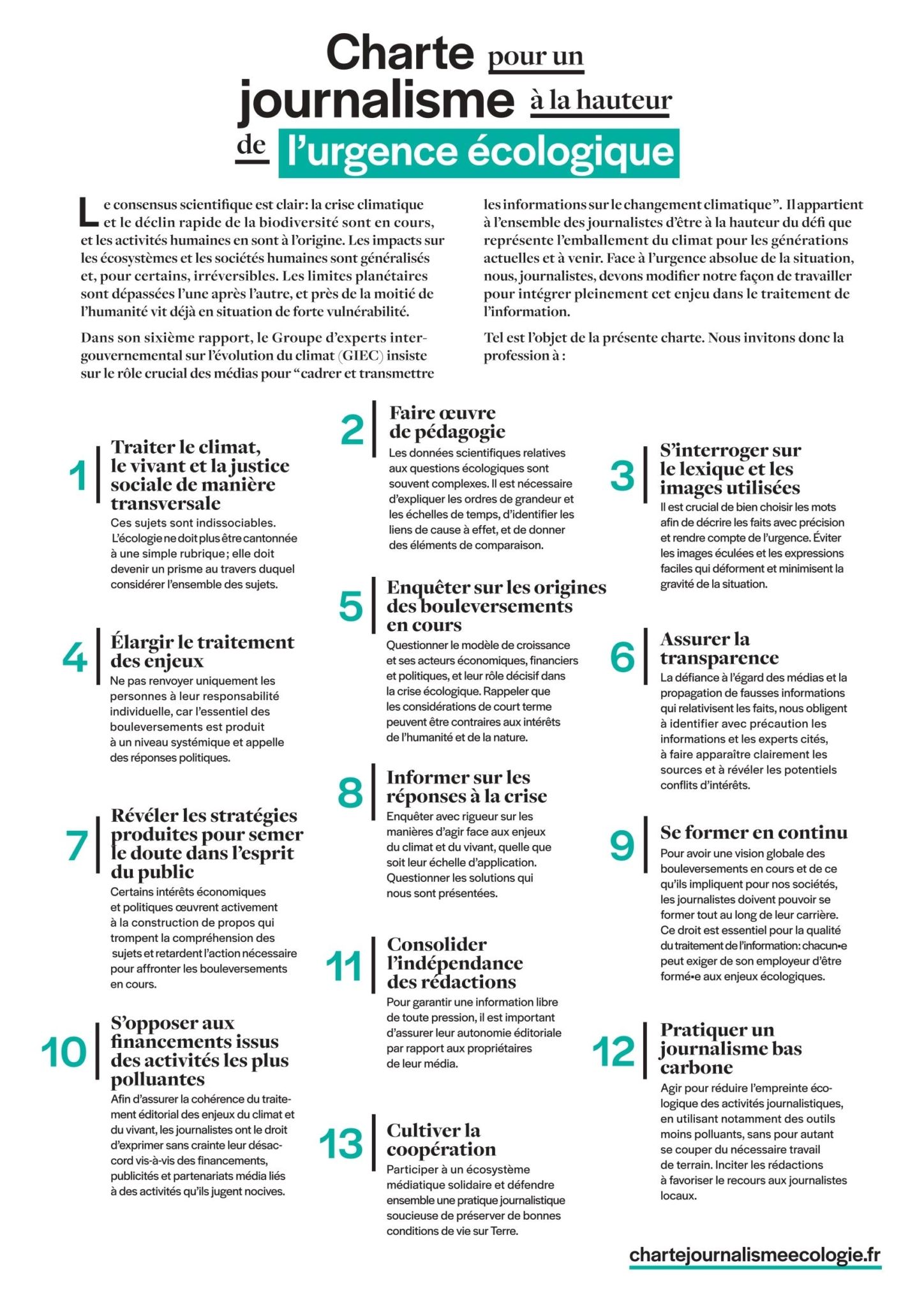
A cross-cutting approach to climate issues is the first point addressed in the Charter for Journalism That Meets the Challenge of the Ecological Emergency. The Christian daily La Croix, a signatory to the charter, has just undergone a transformation that involves integrating environmental coverage into its business section. “Fundamentally, the economic sphere is the key pivot,” explains Jérôme Chapuis, the newspaper’s editor-in-chief, to Vert.
Create an eco-responsible website
Who says an eco-friendly website has to be ugly and clunky? Align yourself with your values by reducing your own environmental impact. Some best practices to adopt include: choosing a green hosting provider, minimizing code, and opting for a clean, minimalist design. The result? Pages that load faster and a better user experience.
Demonstrate transparency
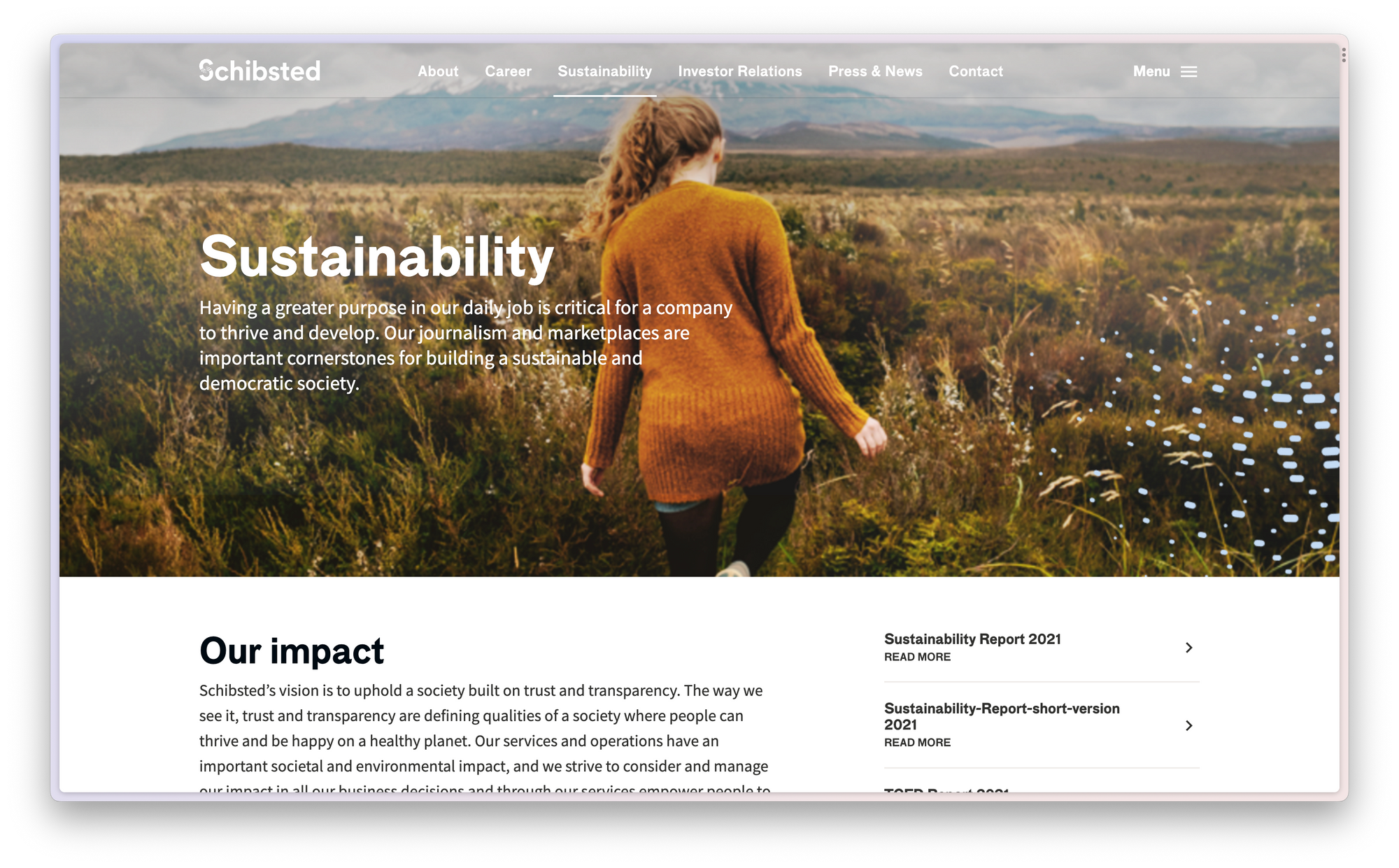
To reduce your emissions, there’s nothing like measuring them. Several tools can help you, such as the Carbo website, the Ecotree calculator, or this chart created by Le Monde’s video department. Then communicate how you’re putting your vision into action by publishing a sustainability report. At the Norwegian group Schibsted, this also takes the form of an impact report.
To go further
- A charter to better cover emergency in the age of ecological crisis? Médianes is a signatory and reflects on this text initiated by independent media Vert in fall 2022.
- How to launch and develop a media outlet in the age of ecological urgency? We share our advice and the experience feedback from the media Climax and Les Others, on the occasion of our event organized in May 2022.
Editor's Note: Médianes, the studio, supported Vert, Climax and Les Others in their strategic development.

Written by Marine Slavitch