It’s (already) the end of August, and the start of the school year is just around the corner. Whatever that means for you—new projects, a new job, or simply getting back into the post-summer routine—this time of year can sometimes be intense, or even a little disorienting.
To help you ease back into the swing of things, we wanted to highlight some important resources and information that can fuel your thoughts as the school year begins. We’ve compiled a selection of articles we’ve published since the start of 2026, all in a concise and practical format.
This isn’t a “best-of” list. Rather, it’s an opportunity to highlight the editorial work produced by the entire team since the beginning of the year—whether it made an impression on you or flew under the radar: perhaps you missed some of them, perhaps you discovered them Médianesover the course of the year, or perhaps you weren’t convinced that a particular article was worth reading. We’d like to give it another shot.
Paper: An Alternative to Online Platforms
After wrapping up 2025 with a focus on technological independence in the media, we began 2026 by exploring new distribution strategies as many media outlets reevaluate their relationship with social media and seek out alternative formats. While print media (journals, magazines, etc.) has emerged in some newsrooms as the most effective way to break free from major social media platforms, this approach is often hampered by cost constraints. The Breton investigative news outlet Splann has found a solution that is both simple and effective with its booklets, which even generate a small profit.
 Owen Huchon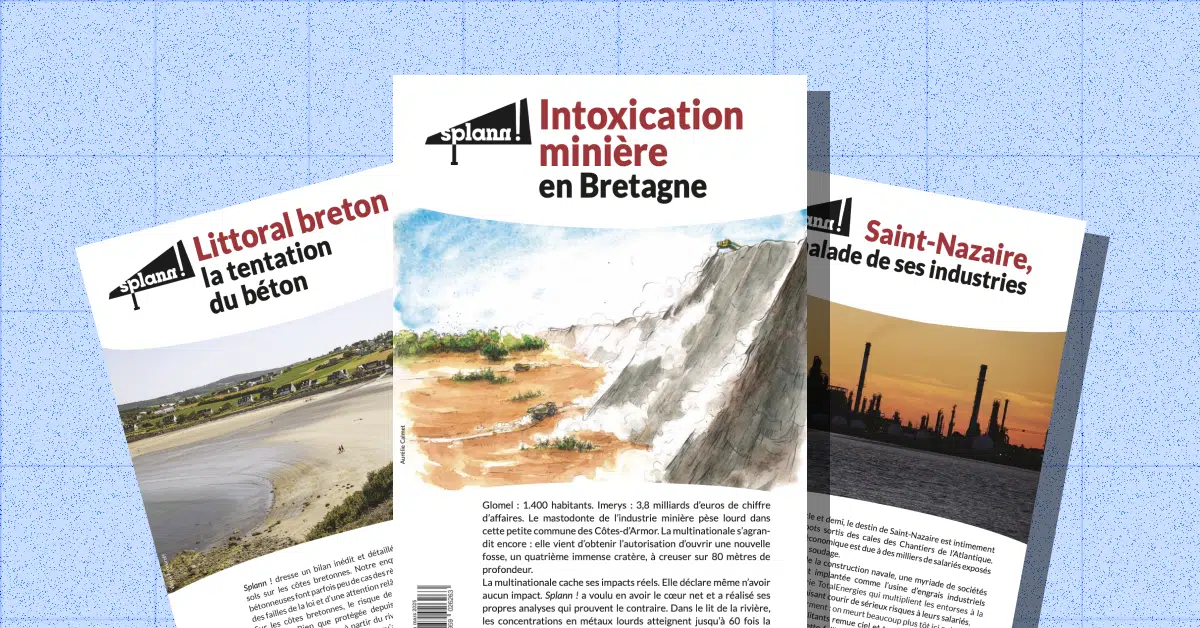
To learn more: Want to get started yourself? Last year, we compiled a number of examples and resources to inspire you.
Format, production, pre-sales, distribution, visibility… From an administrative and logistical standpoint, creating a print publication can be overwhelming. To help you, we’ve put together a guide filled with examples and practical advice to walk you through the process from concept to print, whether your project is a one-time effort or designed to be long-term.
 Dorine Planté
Another option for keeping the costs of a print edition down is to team up with other similar news organizations. This is one of the projects of the Scottish Beacon, a network of twenty-five local Scottish media outlets. As part of their collaborative investigative project, Power Shift—focused on the energy transition—several newsrooms produced a series of articles that they shared on their respective websites, as well as in a joint print magazine. The goal: to work together to bring a national issue to light from the perspective of local media and isolated communities, thereby amplifying their impact.
 Owen Huchon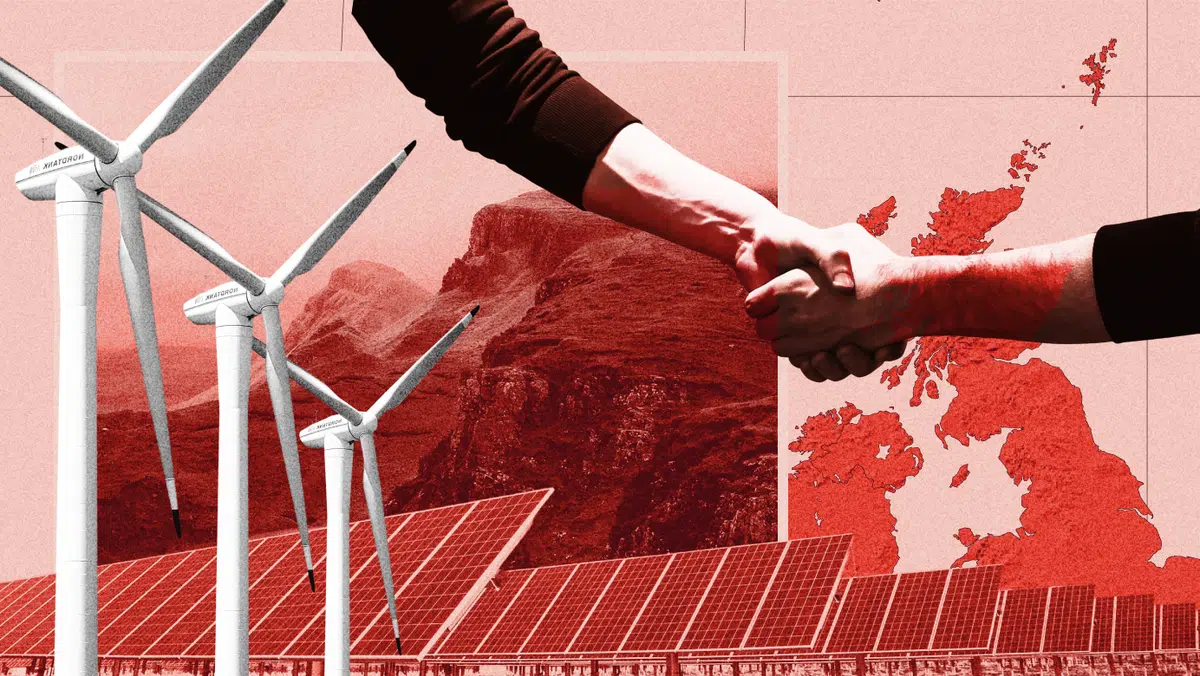
Learn more: Interested in the project? Rhiannon J. Davies of the Scottish Beacon, whom we interviewed for this article, will be at the Local News Festival on September 28.
In Europe, freedom of the press is far from being a given
The beginning of 2026 was also marked, in France as well as in Europe, by a challenging environment for the freedom of the independent press, despite some progress.
 Owen Huchon
We reviewed the figures documented by OFALP (Observatory of Violations of Press Freedom), whose first report, released a few months ago, identified 91 cases of violations in 2024. Behind these figures and the testimonies collected are several independent media outlets for which every legal proceeding and every act of intimidation can become an existential threat.
Further reading: “In Brittany, Journalists Are Being Prevented from Investigating”
 Owen Huchon
This situation is by no means unique to France. For years, Viktor Orbán’s Hungary served as a testing ground for the political and economic stifling of independent media—a model that has spread across Europe through far-right movements, despite new European legal tools, including the EMFA (European Media Freedom Act). In 2026, Orbán lost, and the media machine he had built is beginning to be dismantled… but the press is not out of the woods yet. As Pavol Szalai, head of the European Union and Balkans desk at Reporters Without Borders, points out, it is now up to member states to seize this opportunity to strengthen press freedom—and not to settle for the bare minimum.
Further Reading: Media Freedom: France Is More Than a Year Behind Schedule in Implementing European Rules
AI: Still a Challenge for the Press
The start of 2026 has once again been marked by AI and its impact on the news industry. The latest example is the launch of Google’s AI Overviews in France at the end of July, which has reignited concerns among media outlets that fear the search engine will use their content and siphon off their traffic. As a newsroom, what stance should we take? What impact will this have on our business model? After all, habits are changing rapidly as companies engage in a technological arms race, integrating AI at every turn. While the numerous errors—and even racist biases—in these AI-generated summaries have been repeatedly highlighted, it is clear to users that there are many limitations. Yet ease of use often trumps the need for reliability, and the use of these systems to stay informed is becoming ingrained in audiences’ habits. Should the media resist or adapt to these new practices?
 Klaudia Jaźwińska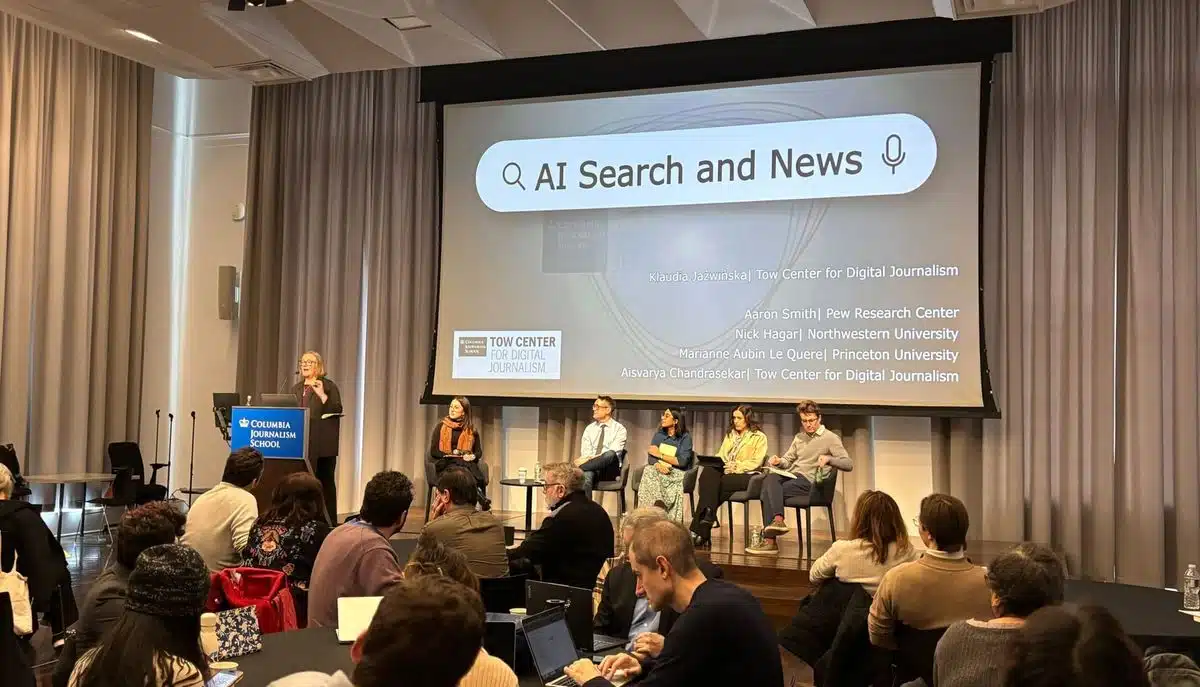
Is it a good idea to optimize everything? To make every task more efficient? While this criterion has long been one of the most important considerations in designing a website or app, the field of graphic design is now embracing the concept of friction: the idea of deliberately slowing things down and avoiding the pursuit of immediacy to which AI has accustomed us. In these times, it may be healthy to reconnect with “slower” art forms, such as painting.
 Christelle Perrin
For some media outlets, the impact of AI also plays out from an editorial and journalistic perspective. Several have chosen to clarify the extent to which they use these tools in their content production. The online news outlet Reporterre, like others, has decided to outright ban generative AI from all of its content. This is a commitment with acknowledged limitations, but one deemed essential given the 54,000 donors who fund the newsroom.
 Owen Huchon
This year, we attended the International Journalism Festival in Perugia. At the event, the Wikimedia Foundation discussed how it is working to retain its readers in a web landscape transformed by AI. Like many media outlets, Wikipedia has long relied on Google to drive traffic that could be converted into donors. Now, the encyclopedia intends to take a more “proactive” approach to its communication strategy by highlighting the people behind the project, its business model, and its values. Could this serve as a source of inspiration for media outlets with similar models?
 Owen Huchon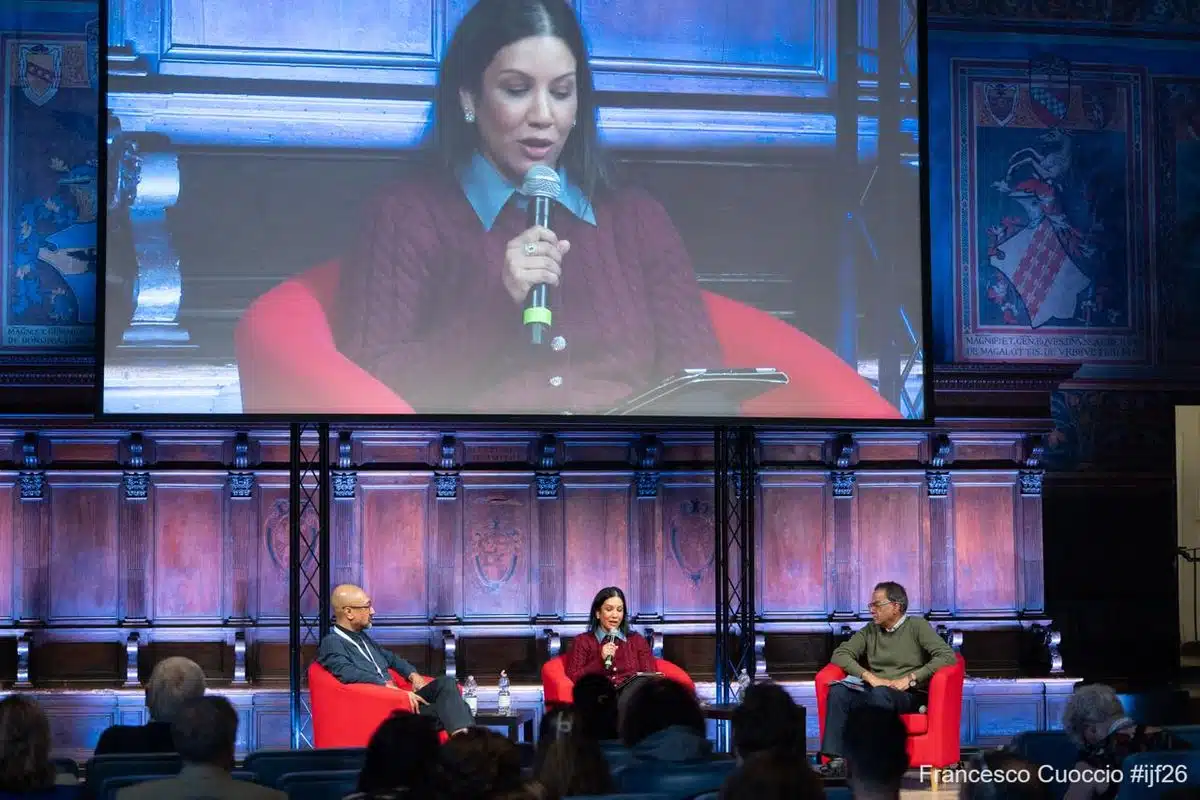
Creating and Organizing Your Media Outlet
Perhaps this new school year will bring new publishing projects—or even an opportunity to launch your own media outlet: that’s good news, because we’ve been producing resources on this topic for six years now. But given the challenges we’ve discussed throughout this guide, you might be wondering: Is it still a good idea to start a media outlet? We think so, but not at any cost.
 Sixtine Yung
Have you already launched a media outlet? Perhaps your goal for the start of the school year is to do things differently or to hone certain skills—for example, by better structuring your editorial content. In our dedicated how-to guide, we’ll help you clarify and optimize the various stages of your editorial products’ lifecycle.
 Marine Doux
Build and Engage Your Community
Reaching new audiences is a priority for many newsrooms. This may be one of your goals between now and the end of 2026. But is it always a good idea? You can quickly find yourself overwhelmed by a (too) broad audience, whereas focusing on your current community may prove more effective—especially given your resources. Here’s how to go about it, without rushing through the steps and in line with your capabilities.
 Dorine Planté
Among the examples we found interesting this year: the “Arrêt sur images” book club, co-hosted by literary videographer Margorito. With this new format, the online media outlet is capitalizing on a trend that addresses several of its challenges: attracting a younger audience, fostering engagement, expanding its community, and more. But the project also raises profound strategic questions, particularly regarding the relationship it should maintain with content creators.
 Owen Huchon
In 2026, we also launched a new monthly series that explores the strategies of independent media outlets across Europe. For the very first issue, we focused on the various formats, tools, and methods for turning a community of readers into donors. Because donations aren’t something you simply decree—they’re built over time. To build a relationship of trust with your community, it’s essential to emphasize its values, transparency, and impact.
 Owen Huchon